5 Criteria Tổ Ong Uses to Classify Walking, Hiking, and Trekking Levels
Adventure travel is no longer unfamiliar to people who love journeys back to nature. However, many people now mistakenly call every route trekking. In reality, adventure travel has multiple levels, including Nature Walking, Mountain Hiking, and Trekking. Each level has different evaluation criteria. Tổ Ong uses 5 factors to classify levels on a scoring scale.
DEFINING WALKING, HIKING, AND TREKKING LEVELS
Nature Walking:
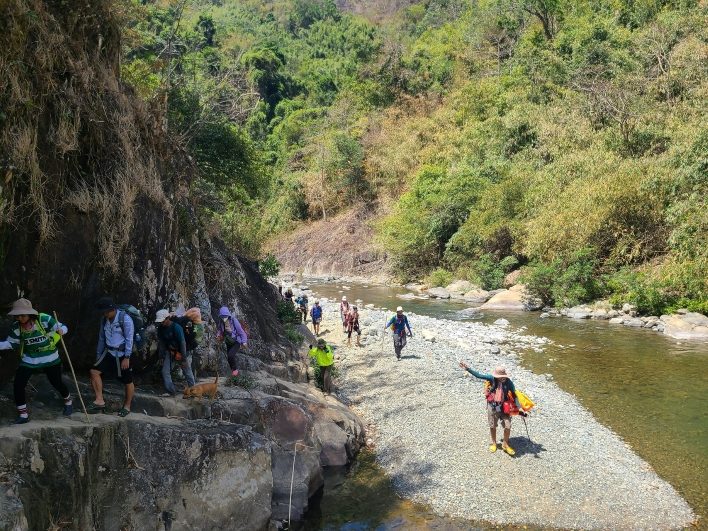
This is the easiest level. The main activity is walking along trails on flat surfaces and simple terrain to explore nature. There are no technical requirements for participants at this level, and the clothing and equipment preparation is relatively simple.
Mountain Hiking:
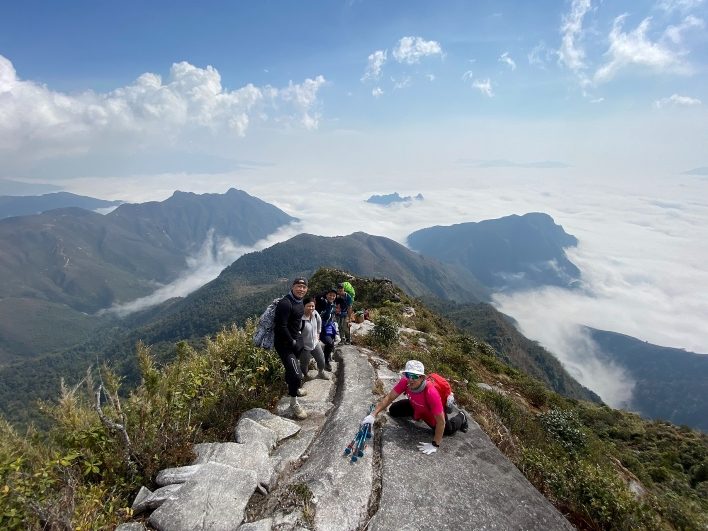
Similar to Walking, Hiking routes are mostly existing trails with clear destinations and rarely go into unfamiliar paths or areas. However, hiking tour terrain is somewhat more difficult, with gentle slopes and mostly forest and mountain environments. Requirements for travel time, elevation, shoes, and clothing are also higher than Walking.
Trekking:
This is the highest level. Trekking takes you into natural areas with fairly rugged terrain, mostly dense forests, hills, and mountains. The route also includes many slopes and cliffs, challenging your endurance and love of adventure. Trekking tours usually require more complex and careful preparation.
5 CRITERIA FOR CLASSIFYING WALKING, HIKING, AND TREKKING
Criterion 1: Time to medical access
This factor is measured by the fastest travel time from the farthest point of the trip to the nearest medical receiving facility. Note that the medical receiving facility is counted as a provincial general hospital, not a local health station, because hospitals have better treatment conditions than health stations.
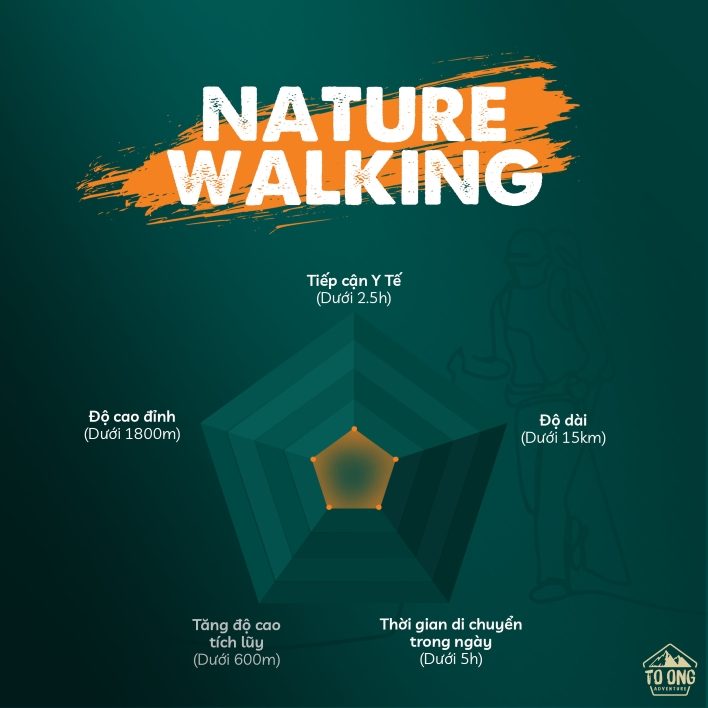
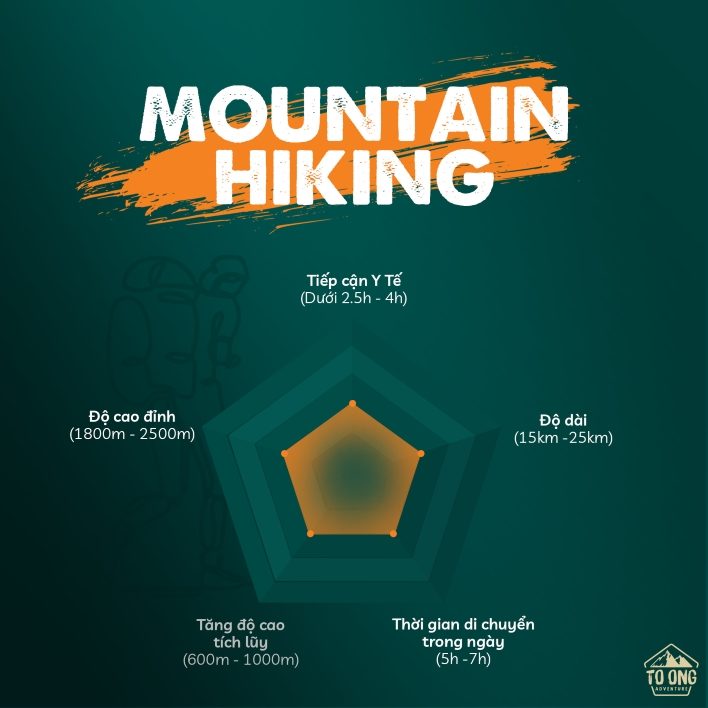
– Specifically: Nature Walking takes under 2.5 hours to access medical care, Mountain Hiking takes 2.5-4 hours, and Trekking takes 4-5.5 hours.
Criterion 2: Cumulative elevation gain
Cumulative elevation gain is like a chart of the ups and downs in elevation as you move through different terrain types such as uphill, downhill, and flat ground. This factor helps tour providers distribute participants’ energy, choose reasonable rest stops, and support participant health.
– Specifically: Nature Walking is under 600km, Mountain Hiking is 600-1000km, and Trekking is 1000-1600km.
Criterion 3: Travel distance
This is calculated as the total distance, in kilometers, of the route traveled from the starting point on foot to the farthest point of the itinerary. Travel distance affects level classification because longer routes require participants to have stronger physical fitness and endurance.
– Specifically: Nature Walking has a distance under 15km, Mountain Hiking is 15-25km, and Trekking is 25-35km.
Criterion 4: Daily travel time
This is the total time spent moving, walking, and being active in one day, from departure to the campsite or rest point. It is important to distinguish between trip length and daily travel time. In practice, daily travel time can vary depending on how fast or slow participants move. Easier routes usually have shorter daily travel times, making them more suitable for participants’ health, and vice versa.
– Specifically: Nature Walking requires under 5 hours of daily travel, Mountain Hiking takes 5-7 hours, and Trekking takes 7-9 hours.
Criterion 5: Summit elevation
Summit elevation is the highest point of the highest mountain peak. It is also the highest point above sea level that participants expect to reach on the route. This is an important evaluation factor because knowing this figure helps participants manage the risk of thin air and understand their ability to complete the route.
In general, most people can reach elevations from 1,500 to 2,000m in one day without problems, but about 20% of people develop some signs of altitude sickness at 2,500m, and 40% at 3,000m.
– Specifically: Nature Walking is under 600m, Mountain Hiking is 1800-2500m, and Trekking is 2500-3000m.

WHO IS SUITABLE FOR EACH LEVEL?
For the easiest level, Nature Walking, participants only need basic health. It is suitable for beginners and those without much experience. At this level, family groups including healthy older adults and children from 7 years old can participate.
Mountain Hiking is for people who have previously joined easier routes and want to challenge their endurance and level up their adventures. Hiking tour participants should have good health, no cardiovascular conditions, asthma, or related illnesses. Ideally, they should already be used to long-distance walking.
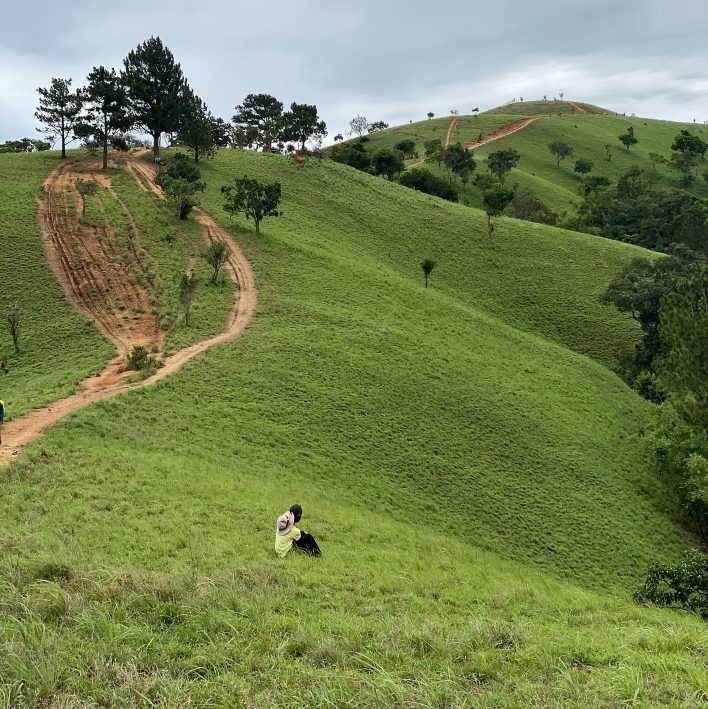
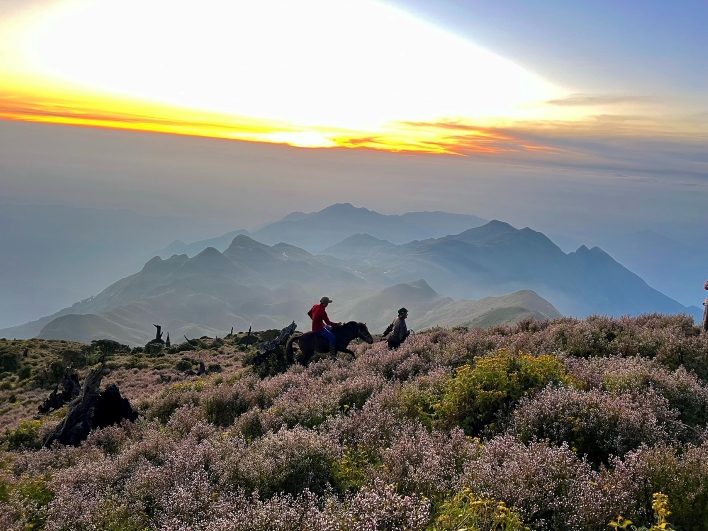
Trekking is for travelers with significant experience in adventure travel activities. Like hiking tours, trekking tours are not suitable for people with poor health or conditions related to the heart, asthma, blood pressure, and similar concerns. Participants should have a good fitness base and exercise regularly.
SUGGESTED ROUTES BY DIFFICULTY LEVEL
Based on these level classification factors, Tổ Ong suggests trekking, hiking, and walking tours that you are likely to enjoy. Nature’s beauty is endless. You do not have to go far; right here along Vietnam’s S-shaped land are winding routes leading to clear peace far from the city, wild and mysterious primeval forests, and layers of rich, unusual vegetation. There are also cloud paradises worthy of the phrase earthly masterpiece, and glowing flower fields covering highland hills.
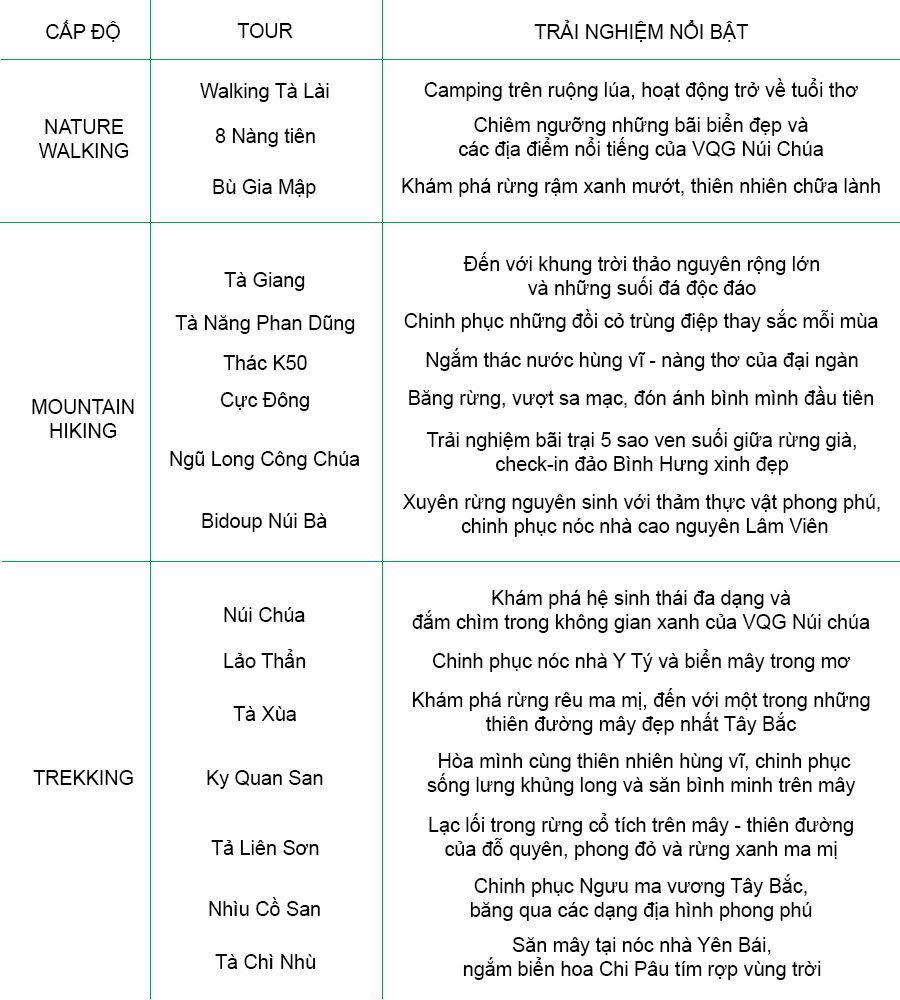
Whichever route you choose, prioritize health, safety, and meaningful experiences. Tổ Ong will support you with full services and professional dedication. Nature is already there, and Tổ Ong is here; all that is missing is your love for the trails. Let’s go. Choose the level that suits you, and do not hesitate to ask Tổ Ong for advice when needed!
Suggested reading:
Ta Lai: A walking tour that takes you into Cat Tien’s tropical forest
Conquering Ta Chi Nhu – immersed in purple Chi Pau flowers