Trekking with To Ong and Tasting Northwest Vietnam Cuisine
The scholar Nguyen Binh Khiem once wrote, “In autumn eat bamboo shoots, in winter eat bean sprouts,” expressing a simple way of life in harmony with nature and the seasons. The same spirit can be found in the people and cuisine of Northwest Vietnam. The shared character of dishes here is their rustic nature and close connection to the natural world. To discover the beauty of highland culinary culture, join To Ong on a trekking journey.
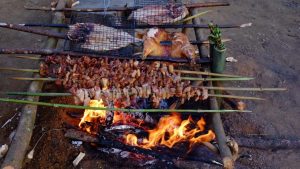
Meat grilled with simple traditional tools
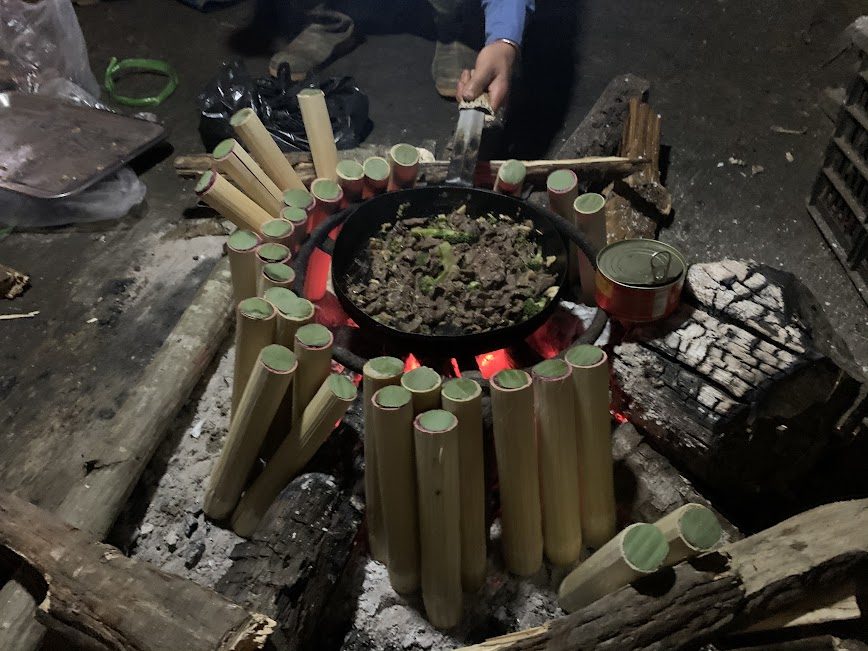
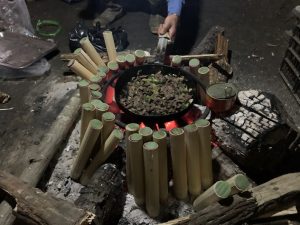
Com lam:
“Lam” means cooking something inside a bamboo tube over fire. In the past, during trips into the forest or to the fields, com lam warmed the stomachs of generations of Dao, Hmong, Nung, and other highland communities. Today, it has become a popular dish with rich cultural value. You do not need elaborate ingredients. A bamboo tube, sticky rice, water, and a little salt are enough to make a fragrant tube of com lam. The rice is white and tender, lightly scented with bamboo, and can keep for several days without spoiling. On a hiking trip, com lam served with grilled meat or sesame salt is hard to beat.
Sturgeon hotpot:
At the end of a Northwest trekking trip, To Ong often takes guests to enjoy sturgeon hotpot. A steaming, fragrant hotpot is sure to delight you. The special ingredient here is the sturgeon. Raised in highland areas with many streams and waterfalls, the fish has firm flesh, little fat, and no heaviness. Its gentle sweetness blends into a sour and spicy broth, and just one sip can feel refreshing. Served with forest vegetables, the hotpot becomes especially distinctive.
Kitchen-smoked meat:
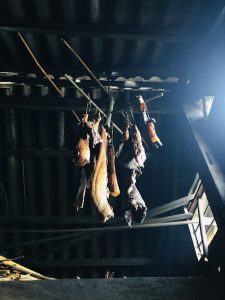
This is perhaps one of the most elaborate dishes in Northwest cuisine, and it is well worth trying while trekking. The meat may be buffalo, beef, or pork from free-grazing animals. Thanks to the mountainous terrain and cold climate, cattle and buffalo here produce very firm meat. First, the meat is cut into long strips of 20 to 30cm. It is then marinated with spices such as chili, ginger, cardamom, mac khen pepper, and white rice wine. Next, the meat is skewered and hung above the kitchen hearth to smoke until cooked. It takes 15 to 20 days to produce the finished dish. By then, the meat has tightened and dried, turning glossy brown with a gentle smoky aroma and deep sweetness. Even without preservatives, it can be eaten gradually for up to a month.
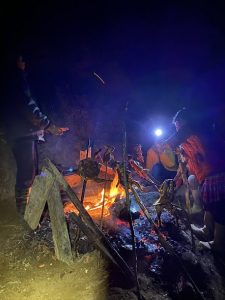
Smoky kitchen-smoked meat
Thang co:
Some people may not enjoy thang co at first, but once they grow used to it, it can become addictive. In the Hmong language, thang co means “pot of water.” Traditionally, every part of the horse is cleaned and used, including the internal organs. Everything is placed in a large pot of water and simmered for many hours. Around 12 spices are added, such as salt, lemongrass, ginger, cardamom, star anise, cinnamon, and lime leaves. Corn and forest vegetables may also be added. Later, thang co was also made with buffalo or beef. In general, it is a challenging dish for some diners because of its strong aroma. Yet that is exactly what makes it special.
Rice wine:
Good food would not be complete without a drink. Each region has its own way of making rice wine, and Northwest Vietnam is no exception. Few things are better than sipping a little highland wine on a trekking trip. The wine is made from the essence of the land, such as corn, cassava, leaf yeast, and natural water. Everything is fermented over a long period to create a quality jar of wine. Another beloved variety is tao meo wine. Tao meo, also known as son tra or mountain hawthorn, grows widely along the Hoang Lien Son range. During harvest, people choose fruits that are not too large, with one rosy side and one yellow side, to soak in wine. The longer it is infused, the more beautiful its color and the richer its aroma. For Northwest communities, wine plays an important role in daily life. It appears at festivals, represents hospitality, and helps conversations flow around the table. Wine can be called the soul of the people here.
Grilling meat with local people
Distinctive local spices:
When trekking, have you noticed what makes Northwest dishes taste so distinctive? The answer lies in spices such as mac khen and doi seeds.
Mac khen is used in most dishes of mountain communities. After harvesting, the fruits are dried for year-round use. Dried mac khen seeds are dark brown, intensely aromatic, lightly spicy, and leave a tingling sensation on the tongue. When used with grilled dishes, dried dishes, or dipping sauces, this spice makes the food wonderfully fragrant.
Doi seeds also play a major role in meals. The doi tree is a very tall hardwood tree. In season, its fruits fall to the ground and are collected by local people. They are dried until the fruit splits open and reveals the seeds inside. Doi seeds are rich in essential oils, with a spicy and highly aromatic flavor, and are often used together with mac khen. Not only the seeds but also the tree itself is valuable. Known as the “black gold of Northwest forests,” doi seeds have helped bring economic benefits to the region.
The foods of Northwest Vietnam have a special pull for travelers with wandering souls. One taste can leave a lasting memory. Cuisine does more than warm hungry stomachs; it helps us understand culture and people more deeply. Trek with To Ong for a chance to experience highland cuisine today.
Suggested reads:
See To Ong Adventure’s Ky Quan San Trekking Tour
The unique beauty of Lao Than in the cold season
Identifying and avoiding poisonous species while hiking Northern Vietnam