Rare Birds of Bidoup Nui Ba National Park
The forests of Bidoup Nui Ba National Park are home to many rare species of plants and animals. They still nurture endemic birds that you can hardly find in ordinary forests. When hiking Bidoup Nui Ba, weaving through vast old-growth forests, you may have the chance to encounter them. Join To Ong to learn about some of the rare birds currently found in Bidoup Nui Ba and what makes these species special.
INTRODUCTION TO BIDOUP NUI BA NATIONAL PARK
Geographic location
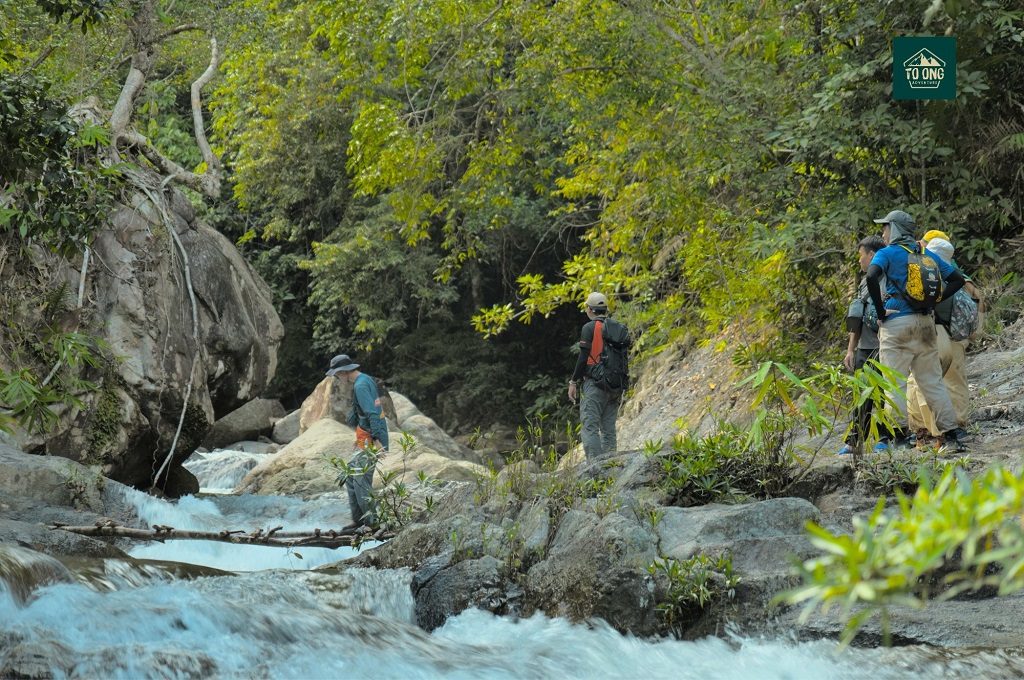
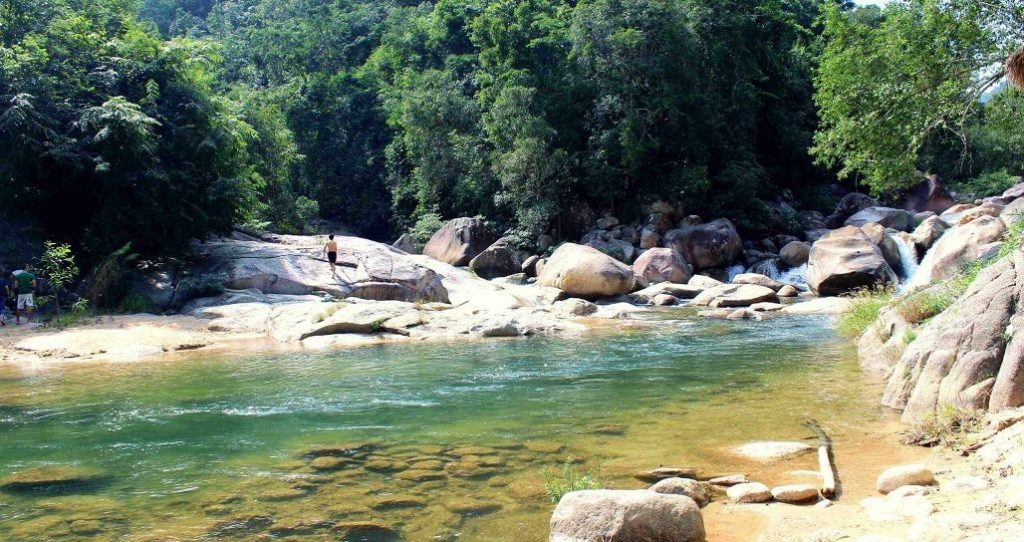
As one of the five largest national parks in Vietnam, Bidoup Nui Ba National Park is named after the two highest mountains in Lam Dong: Bidoup Peak at 2,287m and Nui Ba at 2,167m, both located within the park area. Most of Bidoup Nui Ba lies in Lac Duong District, with part of it in Dam Rong District, Lam Dong Province, about 50km from the tourist city of Da Lat. Thanks to its elevation and diverse ecosystem, Bidoup Nui Ba attracts millions of visitors every year, especially trekkers who love a real challenge.
The ecosystem of Bidoup Nui Ba and its diversity of rare birds
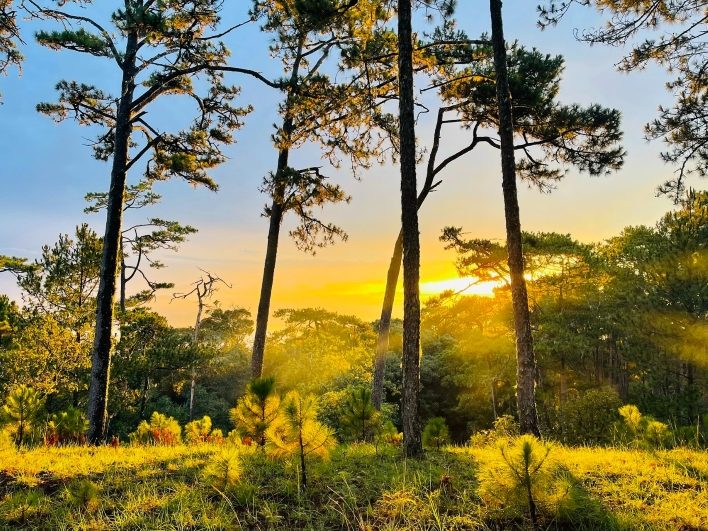
Bidoup Nui Ba National Park has an ecosystem typical of a subtropical climate, with diverse forest vegetation, around 1,400 plant species, and ancient trees more than a thousand years old. Its climate and terrain also create an impressive diversity of wildlife, with more than 400 animal species, including 127 bird species listed in the IUCN Red List and the Vietnam Red Data Book. Among them, 17 rare bird species are especially notable.
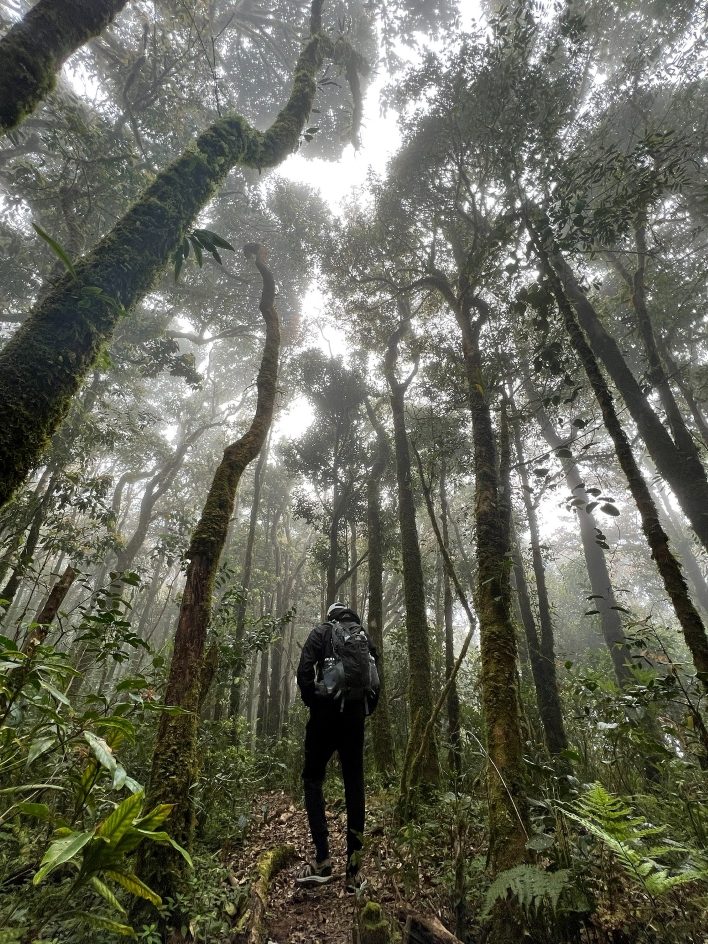
This diversity can be seen right on a Bidoup Nui Ba tour. On the journey to conquer Bidoup Peak, beneath towering ancient trees, you may spot the Black-hooded Laughingthrush with gray cheeks, or a Black-crowned Barwing. Some birds are only the size of your palm, yet remarkably beautiful. It feels as if the brightest colors of nature gather here. Bidoup Nui Ba has become a favorite destination not only for wildlife scientists, but also for nature lovers.
SOME RARE BIRDS IN BIDOUP NATIONAL PARK
In this article, To Ong Adventure introduces five rare bird species currently found in Bidoup Nui Ba National Park: Collared Laughingthrush, Vietnamese Cutia, Orange-breasted Laughingthrush, Langbian Sibia, and Vietnamese Greenfinch. We will look at their physical features, ecology, diet, and rarity.
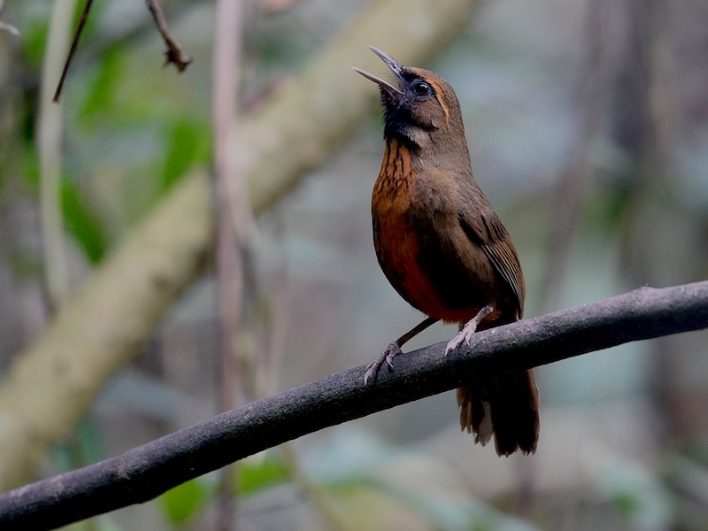
Orange-breasted Laughingthrush
The Orange-breasted Laughingthrush belongs to the order Passeriformes and the family Leiothrichidae. Its scientific name is Garrulax annamensis (Robinson & Kloss, 1919), and it is listed as EN on the IUCN Red List.
Diet of the Orange-breasted Laughingthrush
In Bidoup Nui Ba National Park, the Orange-breasted Laughingthrush is an insect-eating bird. It feeds on many types of insects, including caterpillars, grasshoppers, ants, and other small insects.
Physical features of the Orange-breasted Laughingthrush
The Orange-breasted Laughingthrush is a medium-sized bird, about 25 to 27cm long. It has orange-yellow plumage covering the head and breast, with black bands across the chest. The back is yellowish brown, there is an orange-yellow stripe above the eye, and the throat is black. Females have plumage similar to males, so sex cannot be identified by plumage alone. This bird has a distinctive song with high, resonant notes.
Ecology of the Orange-breasted Laughingthrush
It lives mainly in humid mountain forests such as evergreen broadleaf forest, secondary forest, and forest edges at elevations from 900m to 1,500m above sea level. The Orange-breasted Laughingthrush is a resident, shy species, usually living in pairs or small groups of 3 to 5 individuals.
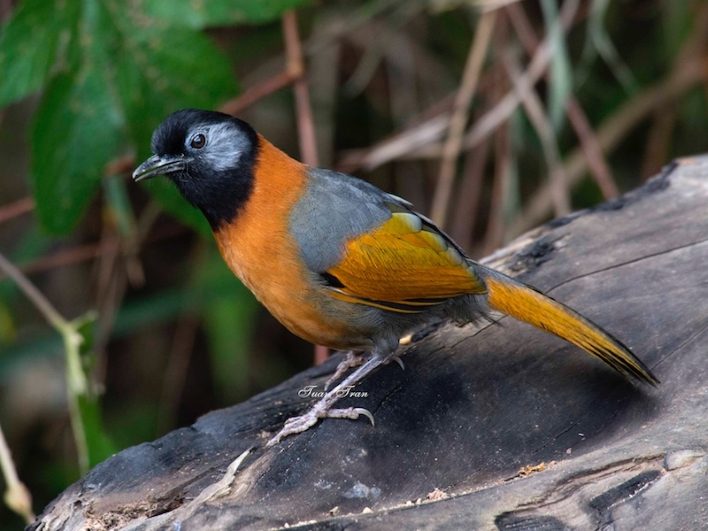
Black-hooded Laughingthrush
The Black-hooded Laughingthrush of Bidoup Nui Ba National Park belongs to the order Passeriformes and the family Leiothrichidae. Its scientific name is Trochalopteron yersini (Robinson & Kloss, 1919), and it is listed as LC on the IUCN Red List.
Diet of the Black-hooded Laughingthrush
The Black-hooded Laughingthrush is considered omnivorous, feeding mainly on insects and some forest fruits. It often forages in the lower canopy and on the forest floor.
Physical features of the Black-hooded Laughingthrush
The Black-hooded Laughingthrush is medium-sized, about 26 to 28cm long. Its body is mainly brownish orange. The head is black, while the throat and cheeks are silvery gray. The chest, upper belly, collar, and upper back are rusty red. The wings are olive yellow with black wing coverts. The tail is olive brown with yellow edges at the base. The lower belly and undertail coverts are brown, while the rest of the body is gray. Its song is loud and resonant.
Ecology of the Black-hooded Laughingthrush
The Black-hooded Laughingthrush mainly lives in evergreen broadleaf forest and mixed broadleaf-conifer forest. It occurs at elevations from 1,500m to 2,450m above sea level. Its breeding season begins from March to April. It is very shy, usually active in pairs or small flocks, and shows strong territorial behavior.
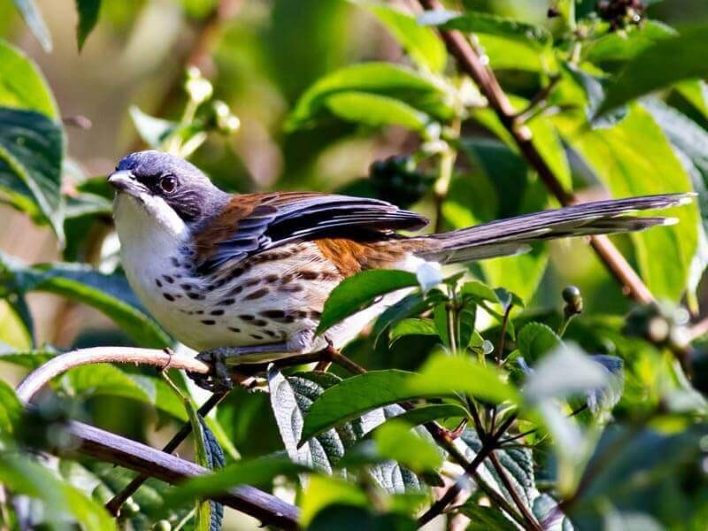
Langbian Sibia
The Langbian Sibia belongs to the order Passeriformes and the family Leiothrichidae. Its scientific name is Laniellus langbianis (Gyldenstolpe, 1939), and it is listed as EN on the IUCN Red List.
Diet of the Langbian Sibia
In Bidoup Nui Ba National Park, the Langbian Sibia usually forages in the middle canopy of evergreen broadleaf trees, moving quickly while catching prey. Its main food includes insects such as worms, butterflies, and other invertebrates. It has a habit of softening prey before eating.
Physical features of the Langbian Sibia
The Langbian Sibia is medium-sized, about 20 to 22cm long. It has gray plumage on the crown and nape, with a faint black eye-ring. The body plumage is mainly reddish brown with pale dark-brown streaks and edges. The tail is pale gray-brown with white tips. The underparts are white with black spots and streaks concentrated mainly along the flanks. The song of this endemic bird is distinctive and whistle-like.
Ecology of the Langbian Sibia
This bird mainly occurs at elevations from 900m to 1,500m in evergreen broadleaf forests, forest edges, and secondary shrub forest. It is a resident species with a small population, shy behavior, and usually lives in pairs or groups of 3 to 5 individuals. Pairing and breeding take place from April to June each year.
Vietnamese Greenfinch
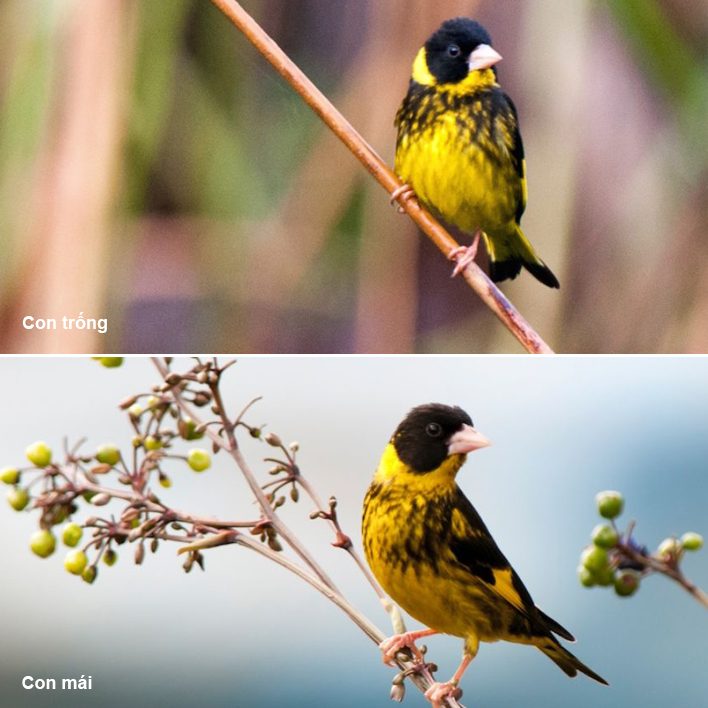
The Vietnamese Greenfinch belongs to the order Passeriformes and the family Fringillidae. Its scientific name is Chloris monguilloti (Delacour, 1926), and it is listed as EN on the IUCN Red List.
Diet of the Vietnamese Greenfinch
It usually forages in the upper forest canopy in Bidoup National Park. Its main food includes pine seeds and insects such as flies, crickets, and grasshoppers.
Physical features of the Vietnamese Greenfinch
This is a small bird, about 13 to 14cm long. It is a black-headed finch with a large conical bill, yellow wings, and a notched tail. Males and females differ in appearance. The male has a black back, yellow rump and upper tail coverts, yellow underparts, black streaks on the chest and flanks, and a pink bill. The female has paler, slightly grayish plumage, with dark-brown streaks on the chest and belly. Notably, the eye-ring of the female is brighter.
Ecology of the Vietnamese Greenfinch
The Vietnamese Greenfinch mainly lives in sparse pine forest, shrubland, or cultivated areas around nearby communities. In Bidoup Nui Ba National Park, it occurs at elevations from 1,000m to 2,000m. It usually lives in small flocks, sometimes gathering in larger groups of up to 20 individuals. Its breeding season runs from December to May of the following year. Nests are built on pine branches.
Vietnamese Cutia
The Vietnamese Cutia belongs to the order Passeriformes and the family Leiothrichidae. Its scientific name is Cutia legalleni (Robinson & Kloss, 1919), and it is listed as NT by BirdLife International.
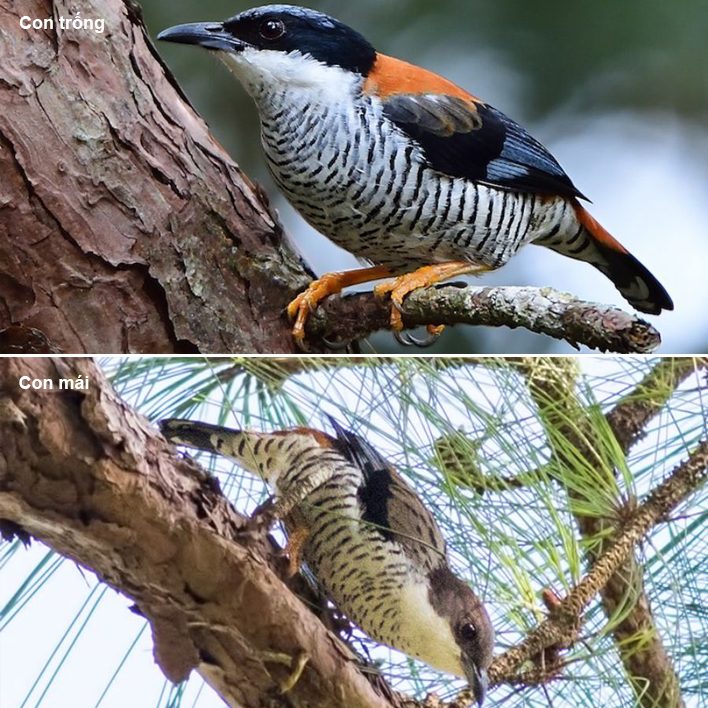
Diet of the Vietnamese Cutia
The Vietnamese Cutia mainly forages in the middle and upper canopy layers of Bidoup Nui Ba National Park. Its food includes insects, seeds, and berries.
Physical features of the Vietnamese Cutia
The Vietnamese Cutia in Bidoup Nui Ba National Park is medium-sized, about 17 to 19cm long. Males have sandy-gray plumage on the crown and nape, with black eye markings extending to both sides of the nape. The upper back and tail are bright chestnut brown. The tail is black with white tips. The wings and wing coverts are black and silver. The belly has many black bands over grayish-white plumage. Females usually have chocolate-brown plumage on the crown and around the eyes. The upperparts and back are gray-brown with large, contrasting black streaks. Its song is high and resonant.
Ecology of the Vietnamese Cutia
This endemic bird mainly occurs in evergreen broadleaf forest and mixed broadleaf-conifer forest habitats at elevations from 1,200m to 2,100m in Bidoup Nui Ba National Park. It is a resident and shy species. It usually lives in small flocks of 4 to 6 individuals, and sometimes forages in mixed flocks with other bird species.
CONCLUSION
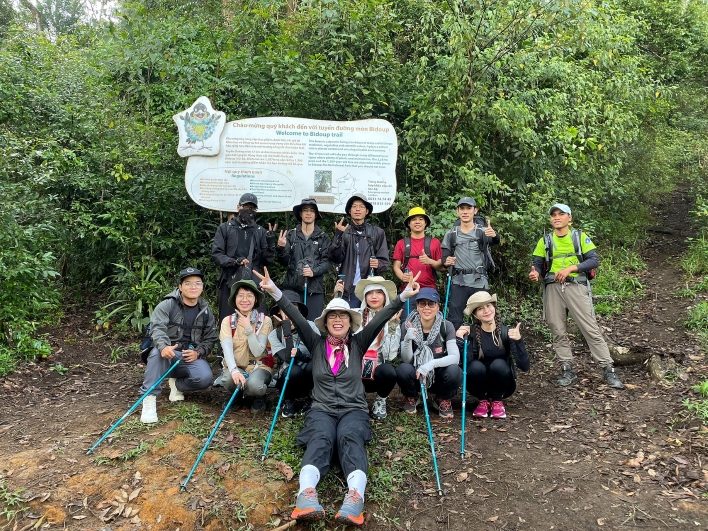
Bidoup Nui Ba National Park treats you to a visual feast: a landscape that delights the eyes and new knowledge that sparks curiosity. Every bird species is a special individual in its own world.
However, exploring nature must always go hand in hand with conservation and sustainable development. That way, every time we return to Bidoup Nui Ba, the green forest can still shelter us and we can still experience its beauty as if meeting it for the first time. No matter how many times you hike Bidoup Nui Ba, To Ong Adventure remains a trusted companion for the journey.