Identifying and Avoiding Poisonous Species on Northern Vietnam Hiking Trips
Vietnam is known for its rich forests and seas. That is because the country’s forests and marine areas hold diverse ecosystems and abundant natural resources. Forest wildlife is countless, and some species carry toxins that can be dangerous to humans. Let To Ong introduce the poisonous species you may encounter during a hiking trip in Northern Vietnam.
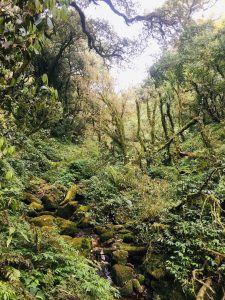
Dense Northwest Vietnam forest
1. A brief look at Northern Vietnam’s forest ecosystem:
High mountains cover much of Northern Vietnam. Many peaks above 2,000m, such as Fansipan, Putaleng, and Ky Quan San, are favorite hiking destinations. Forests in these areas are typically pristine, with rich genetic diversity among plants and animals. Because of their primary-forest characteristics, they also have more poisonous species than many other forest areas.
2. Identifying poisonous species
Animals:
Among poisonous animals, snakes are the most common, so hikers need to learn how to distinguish them.
Venomous and non-venomous snakes have very different features. Non-venomous snakes usually have small, slender heads. In contrast, most venomous snakes have triangular heads that expand when threatened. There are exceptions, however, such as some pit vipers, which are highly venomous but may not have a clearly triangular head.
Next are the teeth. Non-venomous snakes have two rows of small, even teeth. Venomous snakes have two larger fangs used to inject venom. These fangs are easy to notice when the snake opens its mouth.
Some venomous snakes found in the high mountains of Northern Vietnam include:
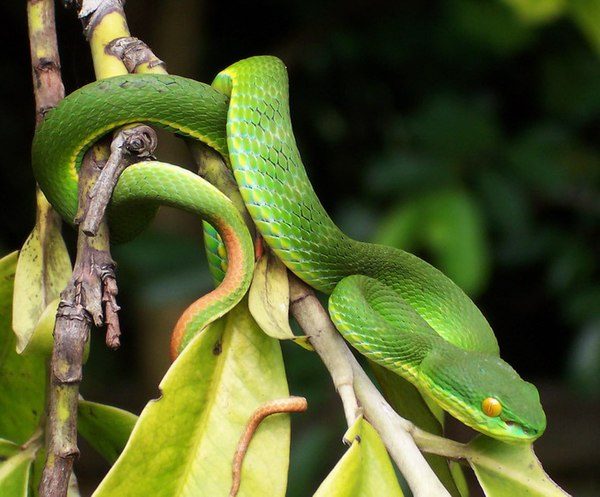
Red-tailed green pit viper:
The red-tailed green pit viper has a green body that helps it camouflage on trees. Its tail is red, as the name suggests. This is a highly venomous snake with a triangular head and vertical pupils. It is about 60cm long in males and 80cm long in females.
Red-tailed green pit vipers mainly live in deep forests in the Northwest mountains. Their venom can cause necrosis and uncontrolled bleeding. Without timely medical treatment, a bite can be life-threatening.
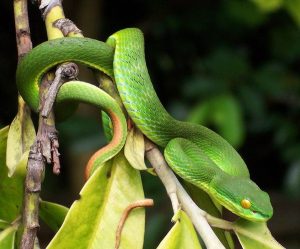
A red-tailed green pit viper with a green body (source: Wikimedia Commons)
White-headed pit viper
This species lives at elevations of 800m to 1,800m, mainly around Fansipan. It has a triangular head with two symmetrical white stripes running lengthwise. Its body is black with white or pale-yellow bands. The average length of a white-headed pit viper is 80cm to 100cm. This is an aggressive species with deadly venom, so hikers should keep their distance.
Plants:
Rhododendron:
Rhododendron is very common in the mountains and forests of Northwest Vietnam. At Putaleng, known as a paradise for this plant, around 30 varieties have been recorded, distinguished by flower color. Rhododendron flowers grow in clusters, and each blooming season makes the mountains look freshly dressed. This attracts many young travelers to hike there. However, the plant itself contains toxins, especially white and yellow rhododendrons. If ingested, the toxins can cause vomiting and difficulty breathing.
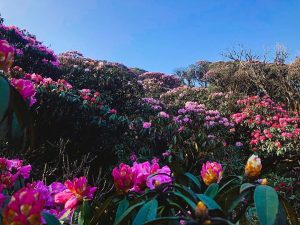
Rhododendron blooming season
Gelsemium elegans:
Often growing wild in northern mountain areas, this hardy plant is highly toxic. Its leaves grow symmetrically, are glossy, and have a lance-like shape measuring 7cm to 12cm long. Its flowers usually grow in clusters and are an eye-catching yellow.
Every part of this plant is poisonous, from leaves, flowers, stems, tubers, and roots to sap. Contact with the sap or accidental ingestion can cause poisoning symptoms such as sore throat, dizziness, nausea, heart failure, and respiratory arrest. Just three leaves may be enough to cause death.
Stinging tree:
The Northwest mountains have a plant that causes intense itching: the stinging tree. It has a woody stem, large serrated leaves, and tiny white flowers growing in clusters. Hikers should stay away from this plant because it can cause burning itchiness for days, create blisters and infections, and may even become life-threatening.
Antiaris toxicaria:
A fast-growing woody tree found in the Northwest, Antiaris toxicaria contains poison in its white sap. If the sap comes into contact with the eyes, it can cause eye burns and lead to blindness. If it touches an open wound, it may cause muscle relaxation, tightly closed eyes, a pale face, and heart failure.
3. Prevention and treatment after poisoning:
To keep your hiking trip safe, keep the following in mind:
Strictly follow the route and your guide’s instructions:
Hiking routes planned by guides have been carefully researched and are considered the safest options. You should not split from the group or go off alone.
Do not approach wild plants or animals:
When you see a beautiful flower, do not rush to touch it. Beautiful and unusual things can hide danger. The same goes for animals: it is best not to approach or frighten them. For many species, venom is only a form of self-defense. If you do not disturb their habitat, they are less likely to harm you.

A beautiful-looking plant that can be highly poisonous (Photo by Егор Камелев on Unsplash)
Do not eat anything you cannot clearly identify:
You may see local people picking wild vegetables to cook, but you should not imitate them. You cannot know whether poisonous leaves have been mixed into what you collect.
Wear covered, tidy clothing:
Clothing plays an important role in reducing the risk of bites or accidental contact with poisonous plants. Choose thick, durable, water-resistant fabrics. Carefully cover exposed areas such as the neck, wrists, and ankles. Hiking shoes should be proper mountain footwear. In wet weather, you may choose boots as an alternative. Always tuck your trouser legs inside your socks.
Carry medicine and first-aid supplies:
A personal first-aid kit is never unnecessary. It should be compact and include cotton, bandages, gauze, antiseptic, and other basic supplies.
What to do after poisoning:
First, stay calm. If the poisoning comes from an animal bite, do not use your mouth to suck out venom or cut the wound. This can increase the risk of infection. You should also avoid applying a tourniquet, as it blocks blood circulation and may cause necrosis. Instead, immobilize the bitten limb and keep it lower than the heart. Clean the bite and get to the nearest medical facility as quickly as possible. If poisoning comes from eating an unfamiliar plant, you should immediately induce vomiting, drink plenty of water, and go to the nearest medical facility.
We hope these insights from To Ong help you feel more confident on your hiking journey. With a team trained in survival and first-aid skills by Survival Skill Vietnam specialists, adventure sports skills by mountaineering expert Phan Thanh Nhien, and extensive field experience, To Ong is ready to bring you safe and memorable hiking journeys in Northern Vietnam. Go hiking with To Ong today.