Pu Ta Leng: H’Mong Legends of a Sacred Mountain
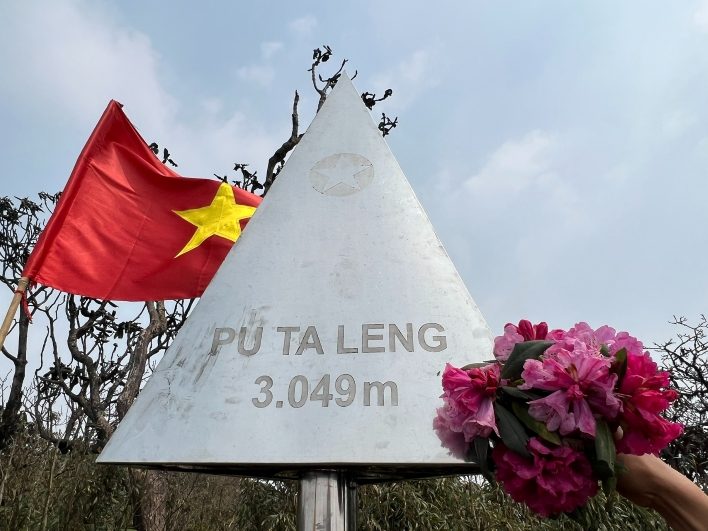
Pu Ta Leng, the third-highest mountain in Vietnam, lies in Lai Chau at the far edge of the Northwest. Through trekking journeys, the mountain has become known as a land of rhododendrons and fairytale-like forests. But fewer people have heard the legends of the H’Mong people. These stories are tied to war and also to romantic love. They shape the ancient mystery and alluring atmosphere of this sacred mountain.
Pu Ta Leng’s location and the story behind its name
Pu Ta Leng is 3,049m high. It is the third-highest peak in Indochina, after Fansipan and Pu Si Lung. The peak lies in the Hoang Lien Son range, in Ta Leng commune, Phong Tho district, Lai Chau province.
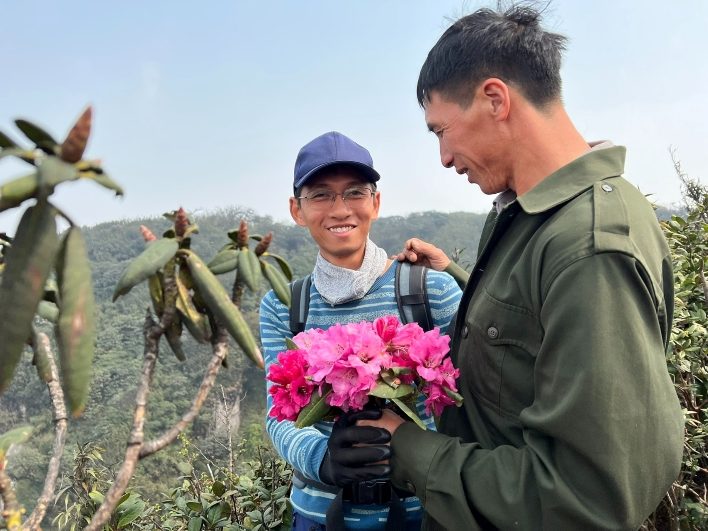
In the Dao language, the mountain’s name is pronounced Pu Ta Leng, though no one knows exactly when that name began. “Pu” means mountain. “Ta Leng” is believed to be the original name used by the H’Mong. The form “Pu Ta Leng” became popular among travelers from elsewhere who came to conquer the mountain. For H’Mong people in Ta Leng village at the foot of the mountain, however, it is still called Po La Thao Mountain. “Po” can be understood as “mountain” in H’Mong, while “La Thao” was the name of an old hunter from the village who unfortunately had an accident on the summit. Since then, local people have called the mountain Po La Thao after that hunter.
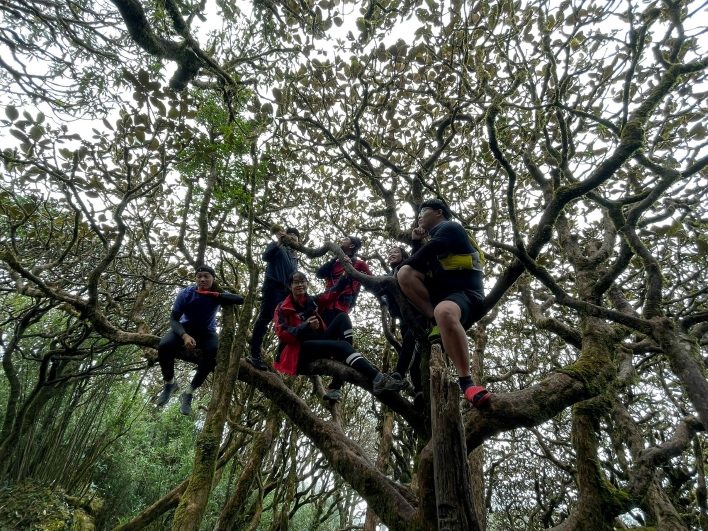
The story of the Dragon’s Bride on Po La Thao Mountain, now known as Pu Ta Leng
The Ta Leng – Giang Ma wedding
No one knows when the story happened, only that it was very long ago, when the name Po La Thao already existed. If girls in Ta Leng village fell in love with men from another village, the groom’s family would come to the bride’s family to hold the wedding, bring full betrothal gifts, and take the bride home.
The daughter of Mr. Trang and a young man from across Giang Ma Pass loved each other. After 2 months, the groom’s family came to the bride’s home and held the wedding in Ta Leng village. After the ceremony, the couple returned together to Giang Ma, also called Giang Mai, in today’s Tam Duong district, Lai Chau.
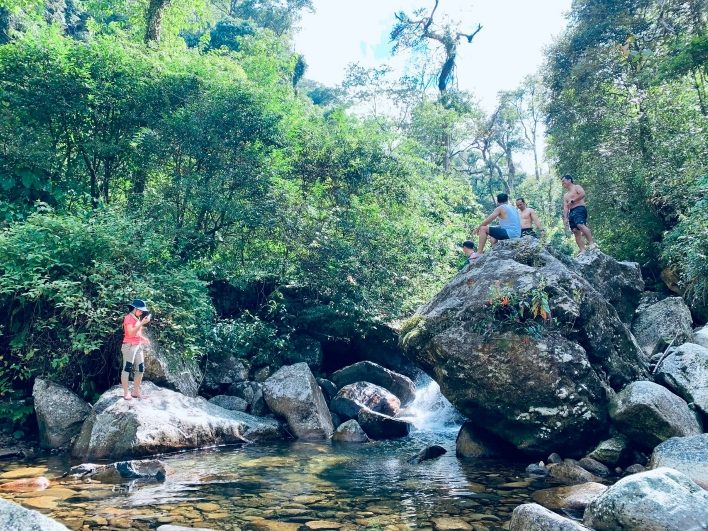
The Dragon’s Bride
The story begins when the young bride fell into Pang Dua Pond, also called the Blue Pond, on the way to her husband’s home. Her husband pulled her ashore and brought her home, but she suddenly became ill and lay in bed for 3 straight days.
Strangely, mysterious dragon-scale marks appeared on her body. Two days later, she died. On the day she passed away, a dark storm swept through the village even though it was daytime. By evening, the rain stopped and the sky brightened. A large, brilliant double rainbow appeared, beginning from Ta Leng, stretching across Po La Thao Mountain (Pu Ta Leng), and reaching Tac Tinh Waterfall on the Ho Thau side.
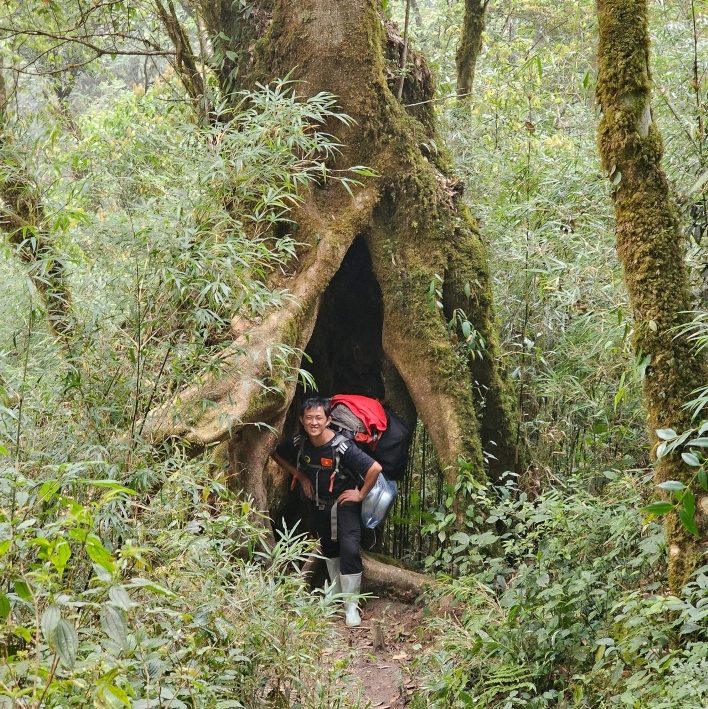
After a series of strange events, the girl’s family invited a powerful shaman to perform rituals. He said that because the girl was beautiful, the Dragon of Ho Thau had chosen her and taken her as his wife. From then on, whenever a double rainbow appeared each year, stretching from Ho Thau to Ta Leng, people believed it was the girl and her Dragon husband transforming to visit her family.
The story of opium poppies and the war between the H’Mong and Thai people
The story says that long ago, when the ancestors of the H’Mong people fled unrest in the north and crossed the border into Vietnam, they stopped in Ma Ly Pho, in Phong Tho, Lai Chau. With fertile soil and hardworking character, they gradually settled and developed their lives. At that time, the H’Mong grew many opium poppies to sell, bringing major economic benefit.
Seeing this, the Thai people became greedy. They relied on the French, with many guns, to force down opium prices. The H’Mong gathered to fight the Thai but lost because of French firepower. Their leader at the time was captured but not killed; instead, he was released. They forced him to lead several villagers to the summits of Po La Thao (Putaleng) and Co Trau (today’s Nhiu Co San) to drive iron stakes 2m deep and build brick structures around them.
Only much later did the H’Mong learn that at those iron stakes, the Westerners had invited a Chinese ritual master to cast a spell so the H’Mong would not become strong enough to resist. The villagers then pulled out the iron stakes and used the old bricks to build the base of the summit marker you see on the Pu Ta Leng tour.
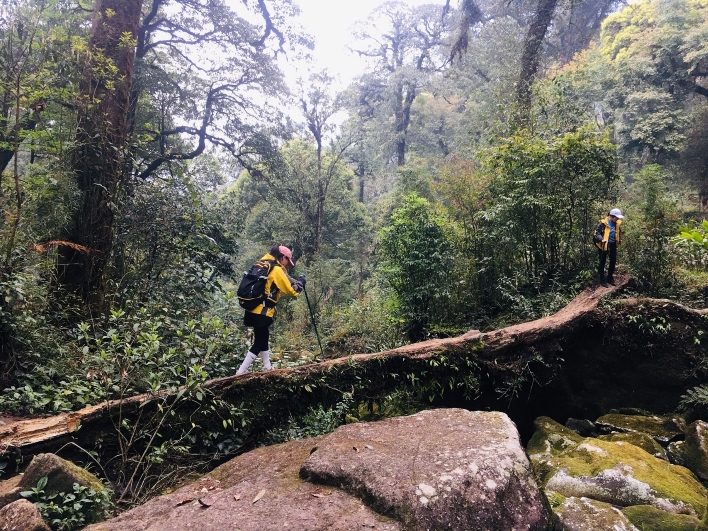
A wild sacred mountain and the beauty of a fairytale forest
Pu Ta Leng is an old land of the H’Mong people. Today, when trekking, you pass through fields belonging to H’Mong villages. You also walk past hills of fragrant cardamom, whose scent spreads through the area.
Perhaps because of the spiritual influence of these legends, or because of the H’Mong people’s respect and reverence for the mountain, stepping into the forest always brings a feeling of wilderness, solemnity, and ancient depth that is deeply captivating.
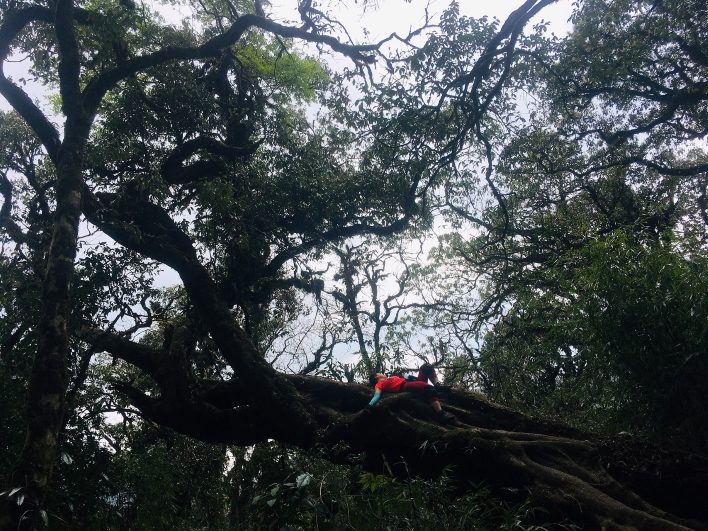
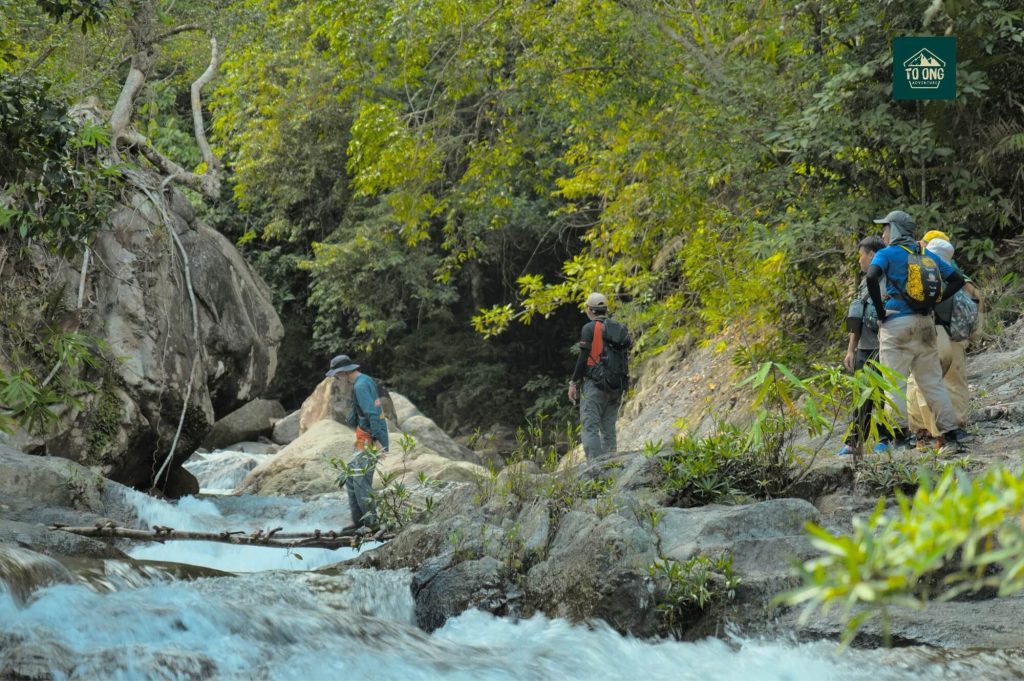
Forests cover the sky, making the landscape feel like a fairytale. Following small streams, weaving through forest paths, and gradually climbing toward the summit, you will encounter steep slopes and seas of rhododendrons waiting for their blooming season. The trees are lush, and the stream water is clear jade green. A few red and pink flowers drift on the surface, adding a graceful touch to the mountain scenery.
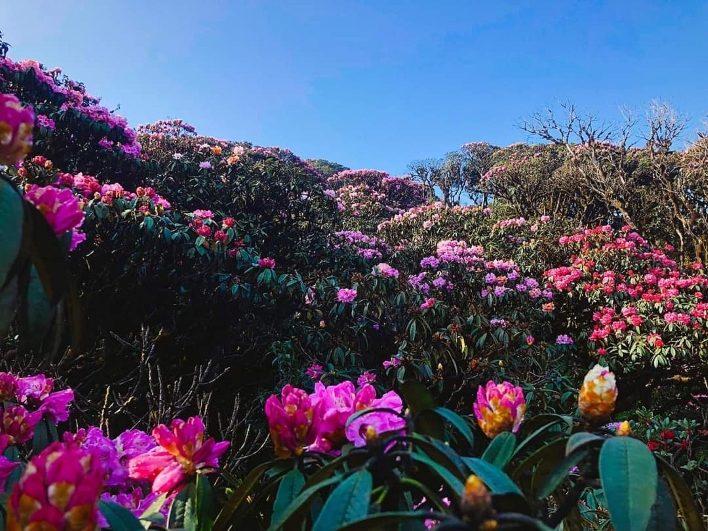
On a journey across Vietnam to explore the country’s many colorful landscapes, let Pu Ta Leng and To Ong be part of your story.