Mui Doi, Vietnam’s Easternmost Point on the Mainland: Every Step Leaves a Mark
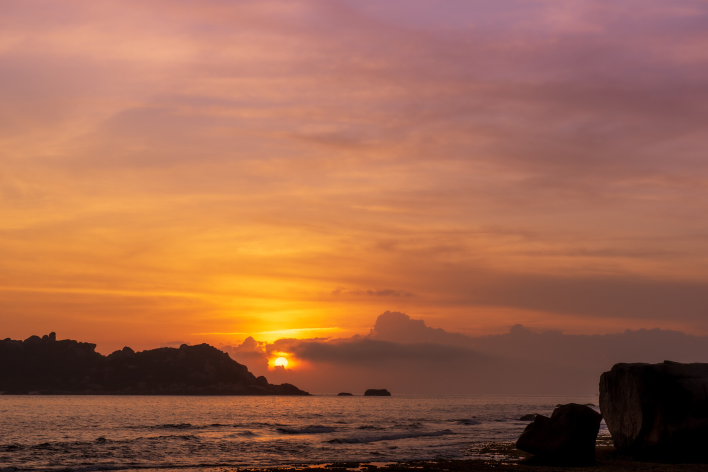
There is a wild, majestic, intensely sunny, and incredibly beautiful Mui Doi, the easternmost point on Vietnam’s mainland. At Mui Doi, you can welcome the first sunrise in the country. Here, you have the chance to admire untouched beaches stretching into the distance, sleep under a sky full of stars, drift with the waves, and enjoy wonderfully fresh seafood. Mui Doi is ready to help you write your own unforgettable adventure story.
On Vietnam’s beloved S-shaped land, there is a place called “Mui Doi, the easternmost point on the mainland.” There, you may feel as if you have stepped into a dreamy fairytale, where sky, mountains, and sea come together perfectly. Follow To Ong Adventure to discover this special destination.
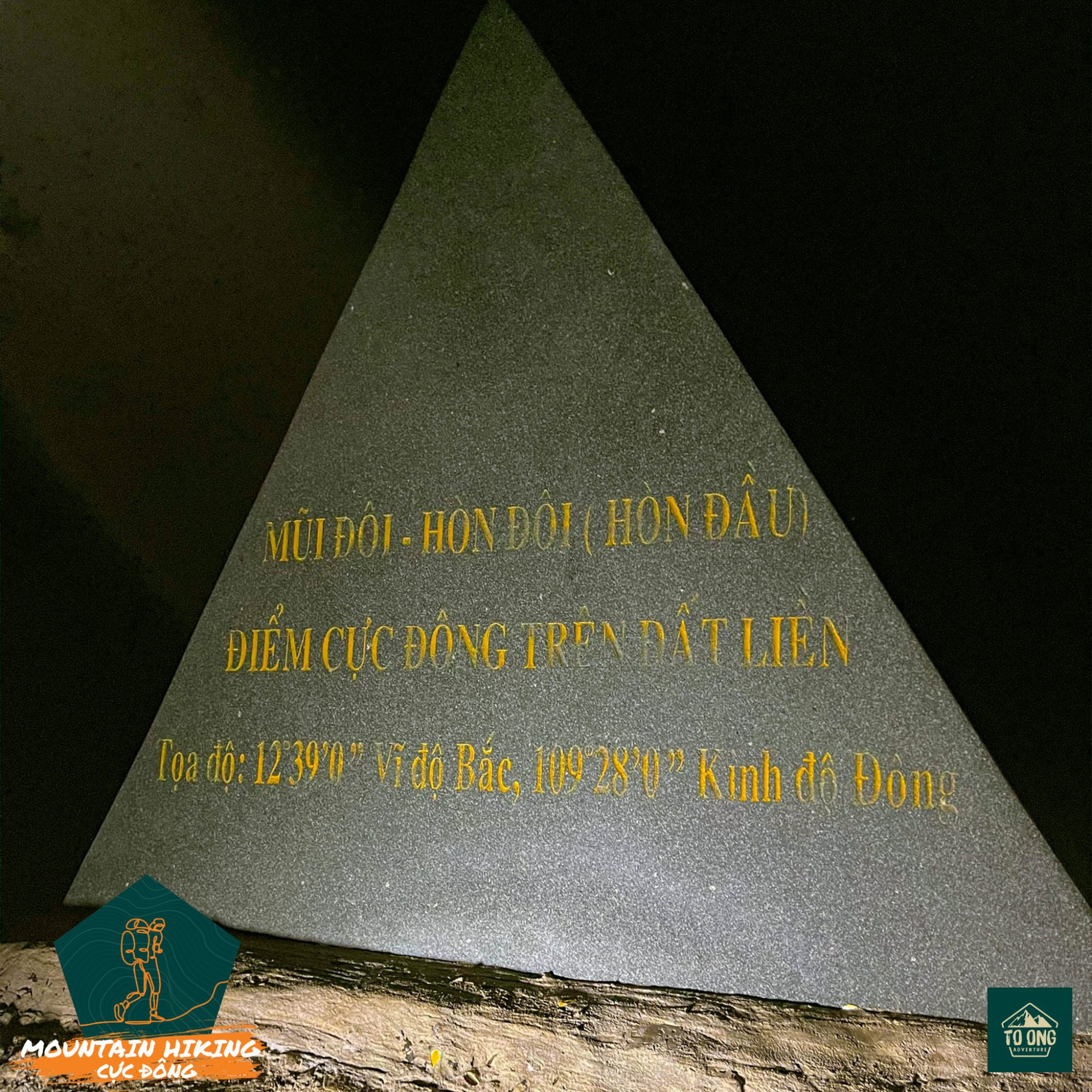 Mui Doi, the easternmost point on the mainland: a golden coordinate for explorers
Khanh Hoa has long been known as a land of “nature” and “wilderness,” where many landscapes still keep their original, untouched character. Khanh Hoa became even more famous among trekkers after Mui Doi was discovered and confirmed as Vietnam’s easternmost point. You may wonder why it is Khanh Hoa, not Phu Yen.
According to many earlier geography documents, Vietnam’s easternmost point was considered to be Mui Dien, also known as Mui Dai Lanh, in Phu Yen. However, after Mui Doi on Hon Gom Peninsula, Van Phong Bay, Khanh Hoa was explored, its geographic coordinates led to its official recognition as the easternmost point in 2017. Actual measurements show that sunrise at Mui Doi comes 4 seconds earlier than at Mui Dai Lanh. Since then, the place where “the sun first kisses Vietnamese land” has officially been named: Mui Doi.
Exploring Mui Doi is exhausting, scorching, and worth every step
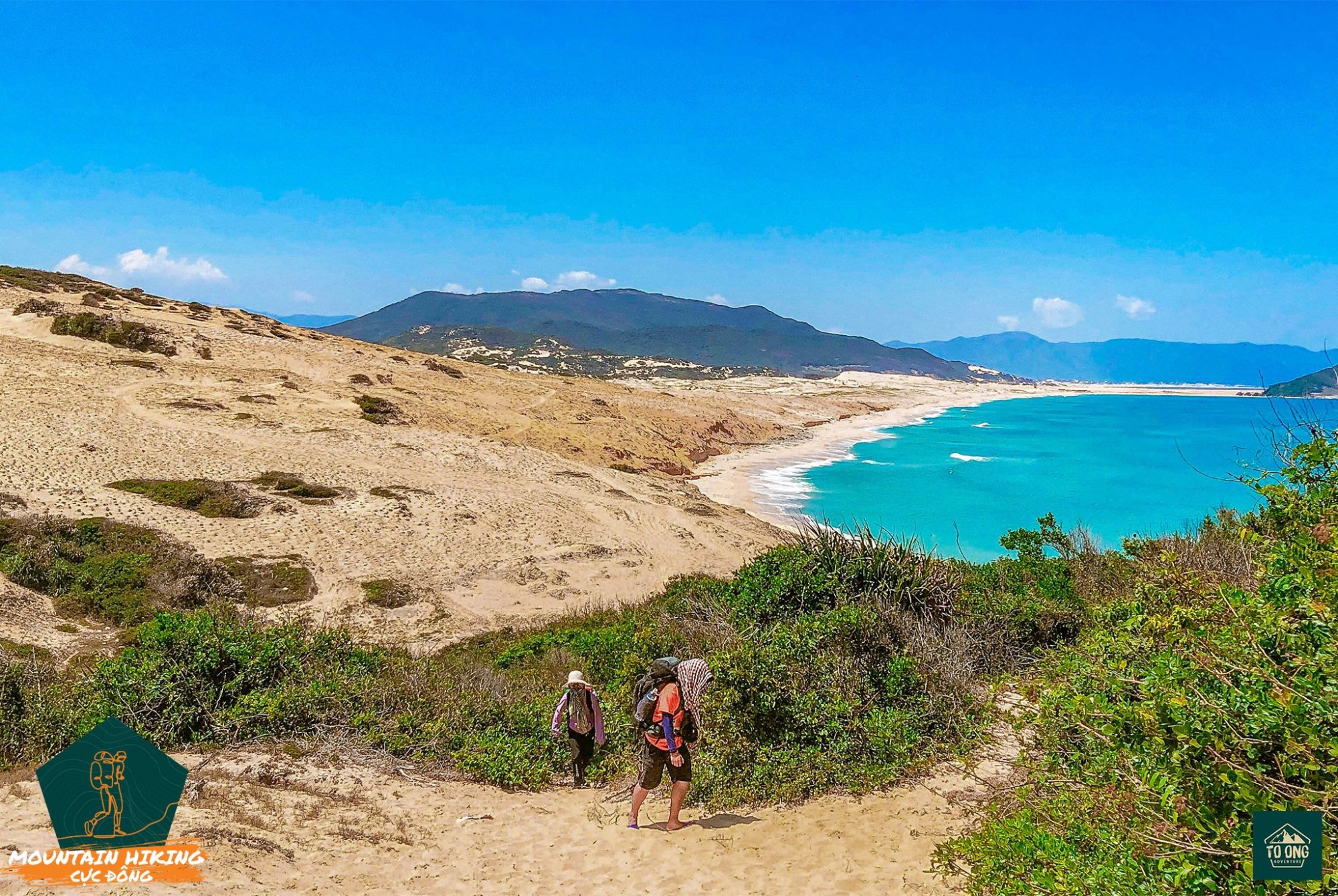
The journey to Mui Doi is not easy. You must cross several types of terrain, from sandy trails to mountain paths, and finally ride a small boat over the water to reach Bai Rang before conquering the block-shaped granite peak where the Vietnamese flag marks the country’s territory.
Mui Doi did not get its name by chance. In reality, this location has two headlands jutting out into the sea. The farthest point lies at 109028’0 east longitude and 12039’0 north latitude; about 500m away is Hon Dau, covering around 20,000m2. The name Mui Doi is simple and rustic, yet the land speaks deeply to the heart.
From Nha Trang City to Mui Doi is about 80km along National Highway 1A, and it is around 35km from Tuy Hoa City. Wherever you start, you need to reach Dam Mon. From there, visitors can choose one of two ways to travel: on foot or by boat, or combine both for the outbound and return journey.
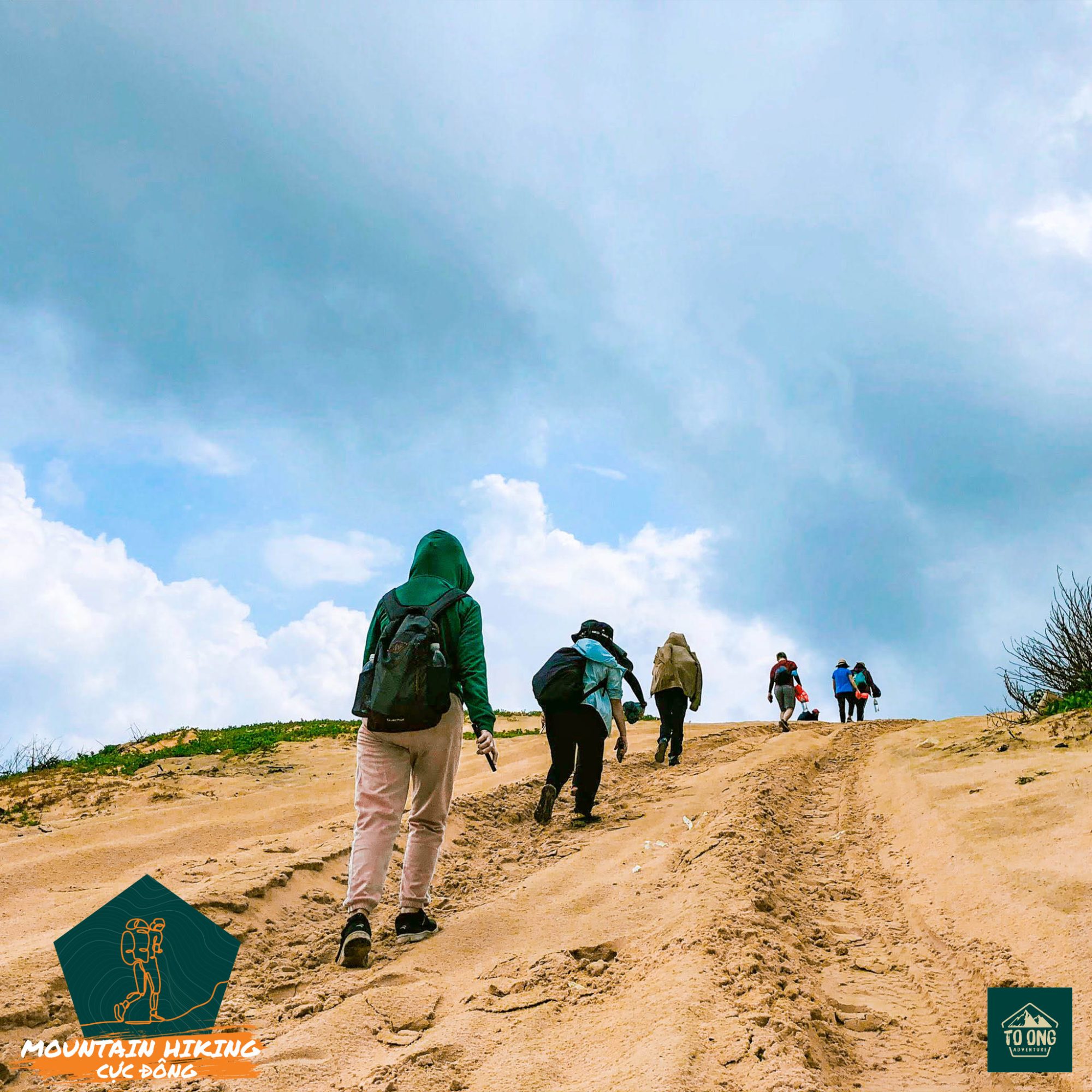
The overland route from Dam Mon to Mui Doi is estimated at 20km, but conquering it is far from simple. It can demand a great deal of sweat and energy from trekkers, from steep rocky slopes and hot sand dunes to slippery, uneven coastal sections. Even so, many young travelers still choose this route as a way to push their limits and conquer themselves. Perhaps that is why many people say, “The road to the easternmost point is not just a trip; it also awakens my soul.”
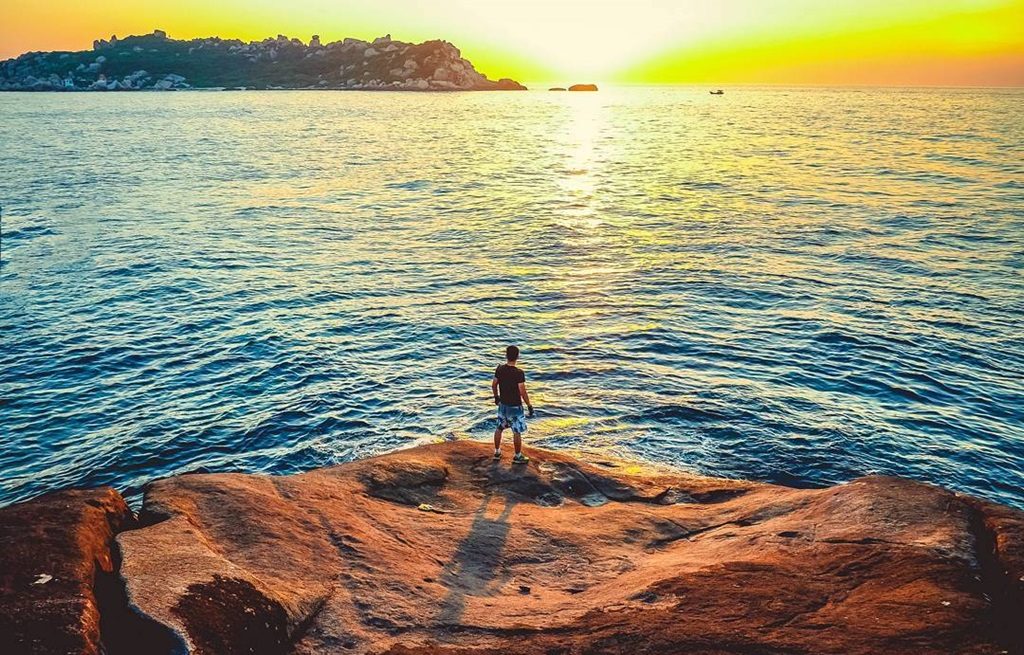
One especially memorable part of the Mui Doi journey is the challenge of scrambling over coastal rocks. After arriving at Bai Rang, visitors must cross rugged rock walls. Their raw, untouched nature requires trekkers to move with great care and skill. Although Bai Rang is only a few hundred meters from Mui Doi, crossing all these rocks can take more than 1 hour.
An important note for trekkers: consider going with local guidance or a professional tour. This makes the journey safer and gives you a better chance of catching the sunrise the next morning.
Blazing sun and singing wind: the climate Mui Doi reveals
Located on Van Phong Bay, one of the few bays that still preserves its original simplicity, Mui Doi is beautiful, alluring, and full of mystery. The climate here has two seasons: rainy and dry. Visitors should choose the right time for their journey.
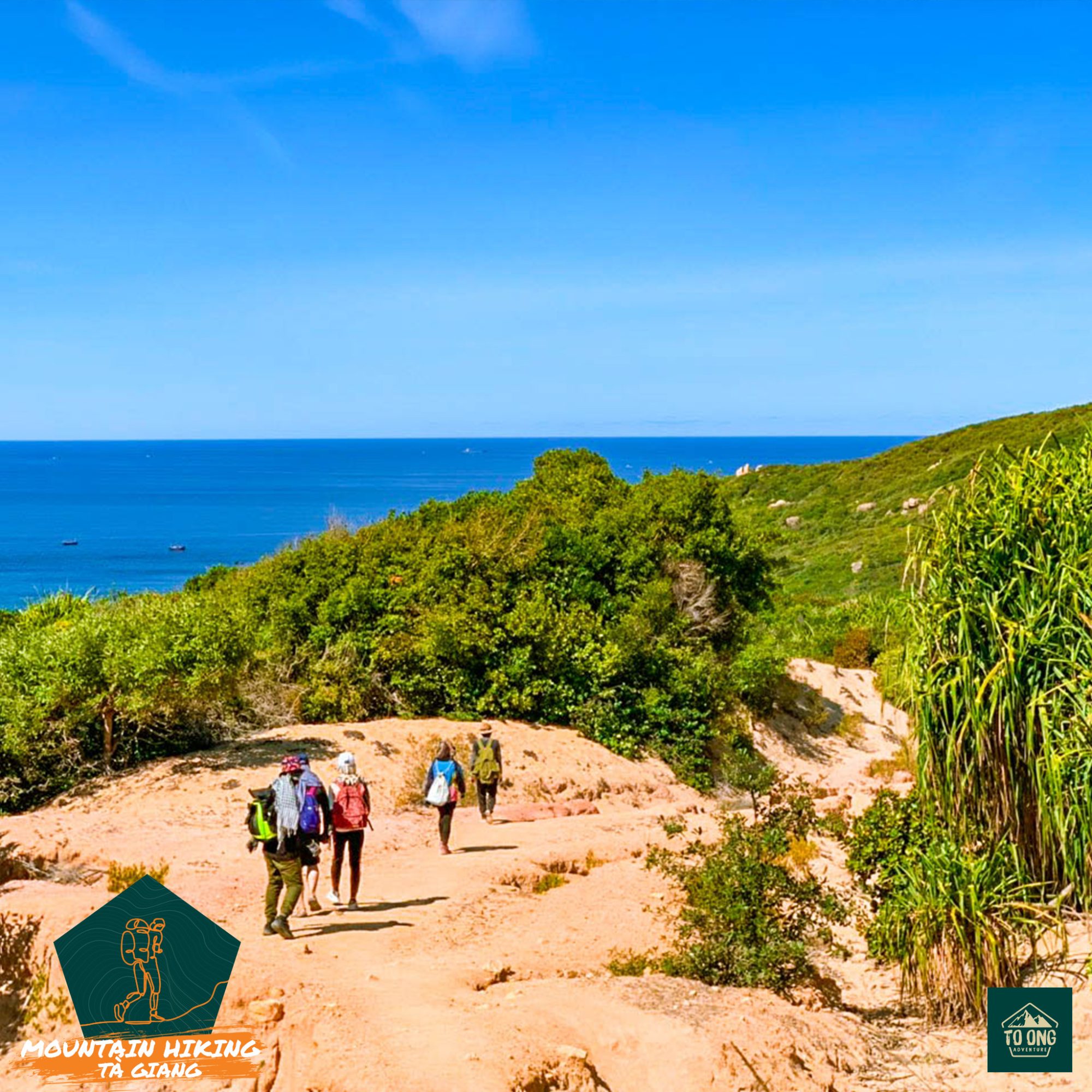 The ideal time to visit Mui Doi is from December to April of the following year, when temperatures are lower, the air is cool, there is little rain, and the trails are dry and easier to walk. It is especially suitable for a journey through forests and over mountains.
By contrast, the period from June to August should be considered carefully because temperatures can be very high. The heat may make your body feel more tired, especially when you have to walk across sand and climb long mountain routes.
Once you go, you will remember it: Mui Doi has more to offer than you may think
What should you do at Mui Doi? In fact, there are many exciting experiences that only Mui Doi can offer.
 Watch the sunrise at Mui Doi: a moment not to miss
After a long, tiring day across sand, stone, and gravel, lying down on the beach and sleeping in nature makes the next morning even more meaningful. When you wake up and see the first sunlight touching the country, the journey to conquer Mui Doi becomes more sacred than ever. Take a deep breath, close your eyes, and feel the peace around you. The sun rises, waves lap gently, and the scent of fish and squid blends with the salt in the sea air. This is truly something only Mui Doi can give you.
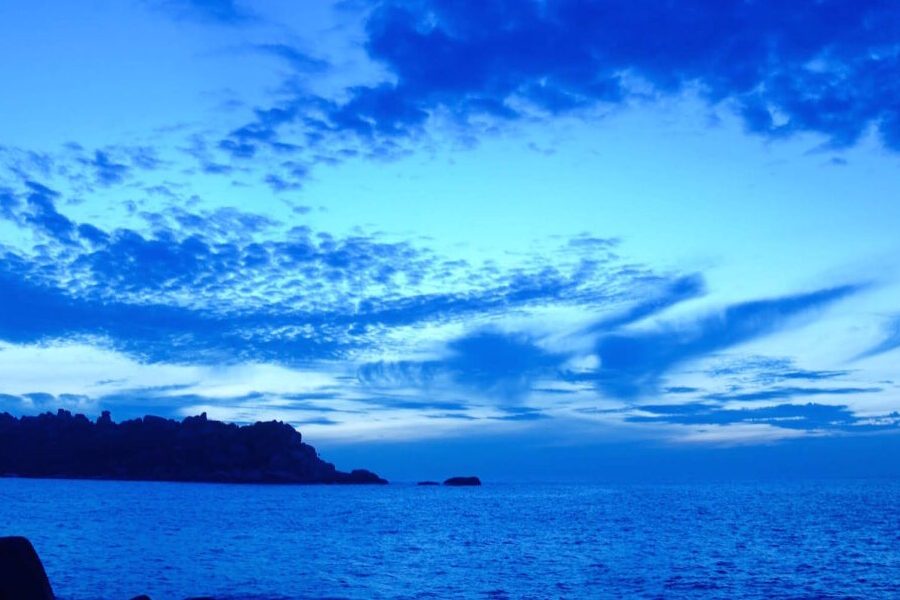
The experience of watching sunset at the easternmost point is also fascinating. You may be among the last to see the sun go down while other parts of the country are already covered in darkness.
Sleep under the stars and wake with the sea
For people who love exploring and camping, sleeping in nature is not unusual. But sleeping by a wild bay, watching the stars, and sharing the night with the open sea is certainly something special.
There are no noisy vehicles, no city lights, no soft beds or warm mattresses. Around you, there is only sky, sea, and fish swimming freely in the water. The scene is strangely peaceful, the kind you may want to hold onto for a long time and never leave.
Swim, but protect your feet
On the trekking route to Mui Doi, Bai Rang appears like a special reward from nature. Wild yet poetic, it has smooth white sand with few footprints and clear blue water without a trace of cloudiness. Take a short moment at the end of the day to soak in the water, wash away your fatigue, and find peace of mind.
Note that Bai Rang is still very untouched, with many coral reefs near the shore. Prepare sandals before entering the water.
What to eat at Mui Doi?
Mui Doi has no restaurant where you can book a table in advance. It does not have every seasoning you need for elaborate dishes. But Mui Doi does have plenty of the freshest seafood ready for you to enjoy. If you happen to meet local fishermen on their way back from fishing, you may be able to buy shrimp, crab, fish, or squid just pulled from the sea and cook them with the simplest tools right on the beach. Still, to make sure you stay well fed, plan to eat in nearby areas as needed.
The journey to conquer Mui Doi is not easy and may cost you plenty of sweat, but the reward is priceless. Vietnam still has many beautiful places like this waiting for you.
Join To Ong Adventure to welcome Vietnam’s first sunlight on the 2-day, 1-night Easternmost Point tour. The journey takes you hiking through forest, crossing sandy terrain, climbing rocky outcrops, and reaching the cliffside to greet the first rays of the sun. You will also experience swimming in the sea and enjoying a hearty BBQ dinner beside clear blue water.
To Ong is ready. How about you?
Contact To Ong Adventure:
- Address: 53 Street No. 2, Van Phuc Urban Area, Hiep Binh Phuoc Ward, Thu Duc City, Ho Chi Minh City.
- Email: hello@toongadventure.com
- Hotline: 0933 22 78 78
- Website: toongadventure.com
- Facebook: facebook.com/toongadventure