Exploring the Ecosystem of Bidoup Nui Ba National Park
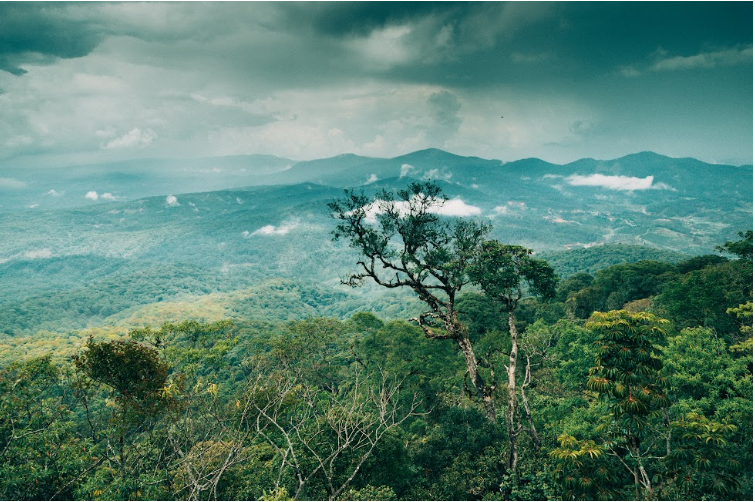
In the middle of a dazzling city, have you ever wanted to find something pure from nature? Bidoup Nui Ba National Park, with its pristine and majestic beauty, will certainly not disappoint. Join To Ong as we explore the nature of Bidoup Nui Ba.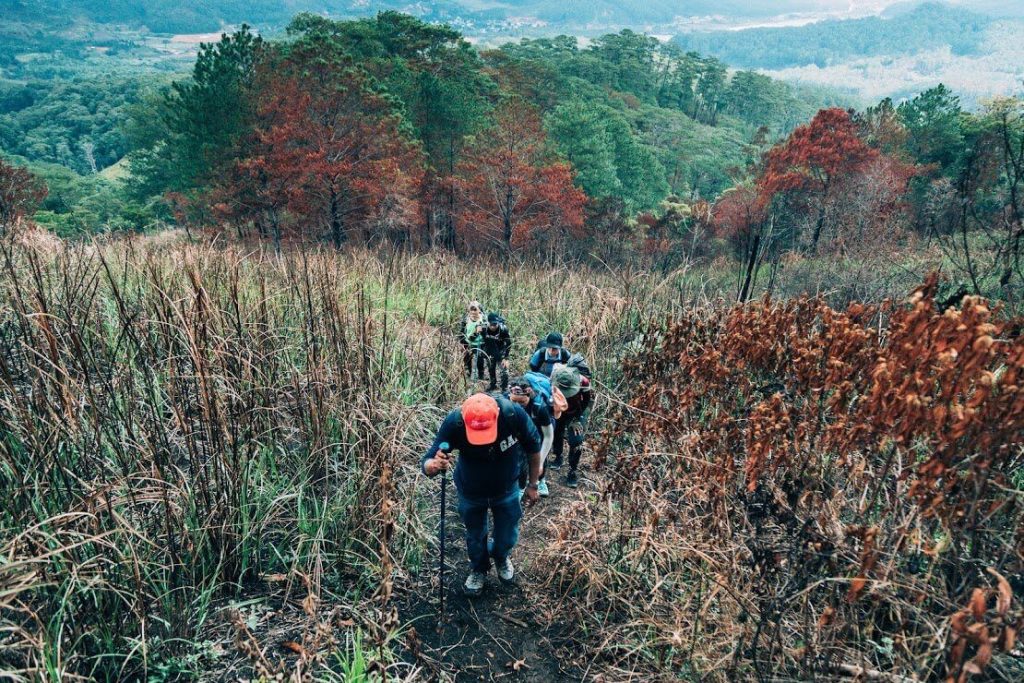
1. A Brief Introduction to Bidoup Nui Ba National Park
Bidoup Nui Ba National Park, located in Lac Duong and Dam Rong districts of Lam Dong Province, is one of Vietnam’s four biodiversity centers. The park covers 64,800ha and is named after the two highest mountains in Lam Dong: Bidoup Mountain at 2,287m and Nui Ba at 2,167m. It is the highest southern section of the Truong Son Range.Since its establishment, the national park has continued to fulfill its mission. First, it conserves biodiversity for the Da Lat Plateau, the southern Central Highlands, and the South Central Coast. Second, it protects headwater forests for downstream river and lake systems. Third, it preserves primeval forest habitats and indigenous cultural features for scientific research, ecotourism development, and national defense and security.In recent years, adventure travel activities such as hiking and trekking have drawn strong interest from young travelers. Bidoup Nui Ba has become a highly attractive destination.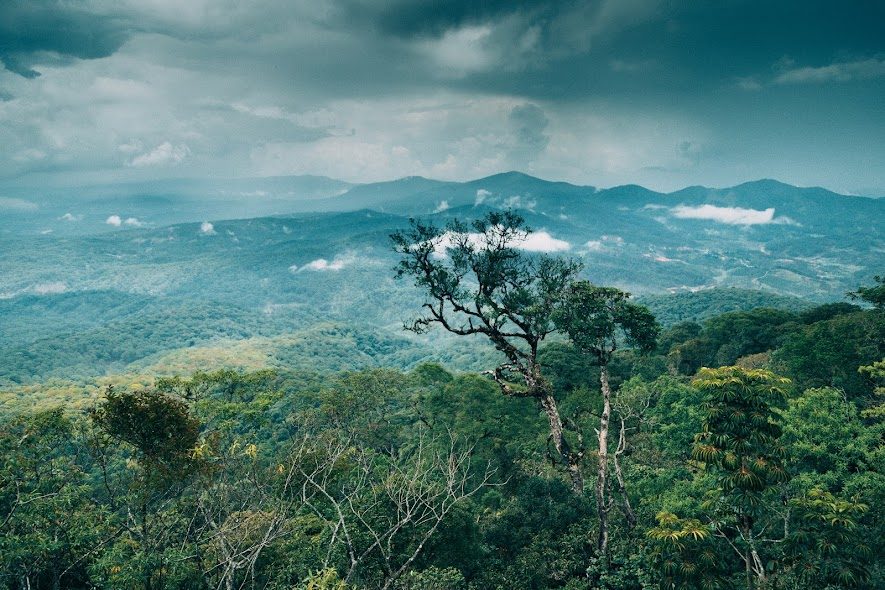
2. A Diverse Ecosystem
On the map, Bidoup Nui Ba National Park has the shape of an upside-down U, spreading across thousands of hectares. Because of its geology, terrain, and climate, Bidoup Nui Ba contains many forest types. The east, northeast, and a small part of the southwest are concentrated areas of primeval forest, including evergreen broadleaf forest, coniferous forest, mixed broadleaf and coniferous forest, and three-needle pine forest. The remaining areas are secondary forest with mixed bamboo forest and shrub grassland. This variation creates a clearly diverse ecosystem. Bidoup Nui Ba National Park is one of Vietnam’s four biodiversity centers.
Plants
Pine forest shimmering in sunlight
Bidoup Nui Ba is currently home to more than 2,000 plant species, including 96 endemic species. Among them are 62 rare species listed in the Red Book, such as flattened two-needle pine, yew, Fujian cypress, and other precious conifers. In particular, flattened two-needle pine is an ancient tree species found only in Vietnam. Bidoup Nui Ba is home to around 1,000 individuals of this species. Some trunks reach 2m in diameter. They grow very slowly: their trunk diameter increases by only about 1mm per year. To reach a diameter of 2m, they have gone through thousands of years of growth.If you visit the park in the early months of the year, you can admire countless flowers in bloom. Along the trail are delicate rhododendrons in the mist. The park is also home to many rare orchids, with 297 species recorded.Bidoup Nui Ba is also a world of fungi. At present, 81 species of macrofungi have been recorded in the area. Among them, three have medicinal uses, 13 are edible, five are poisonous, and the remaining 60 have unknown uses. Beefsteak fungus and lion’s mane mushroom are two rare fungi listed in the Vietnam Red Book.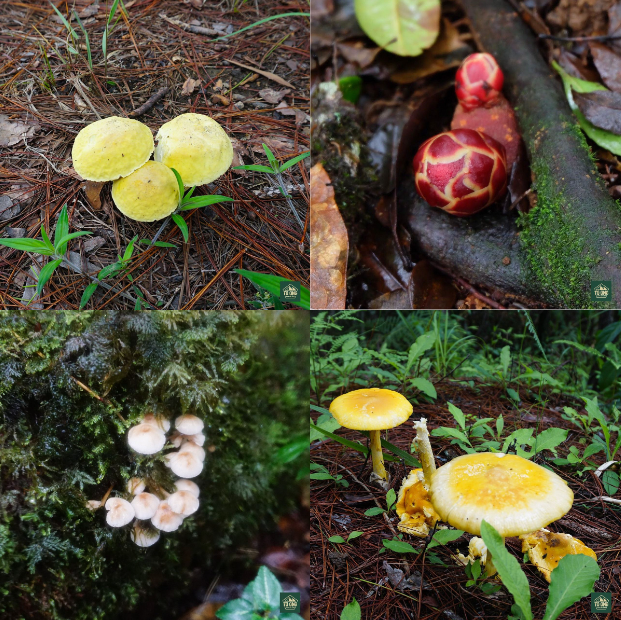
Animals
Bidoup Nui Ba has up to 548 vertebrate species. These include 75 mammal species across nearly all major orders, such as carnivores, proboscideans, primates, and even-toed ungulates. Many species are listed in the global Red List, including elephants, tigers, stump-tailed macaques, Asiatic black bears, leopards, and gaurs.This land is also considered an Important Bird Area of global significance, with 301 recorded bird species. Many species found only in the Da Lat Plateau include the black-crowned barwing, pale-capped pigeon, yellow-billed nuthatch, long-billed laughingthrush, grey-crowned crocias, and Langbian laughingthrush. Bird species of conservation concern in the Bidoup Nui Ba area also include Siamese fireback, white-rumped shama, and red-breasted parakeet. Two globally threatened species are the great hornbill and Austen’s brown hornbill.While walking in the forest, trekkers can easily encounter the yellow-cheeked tit. It lives mainly in forest areas near cultivated fields. Near streams, you may find the grey-headed canary-flycatcher and white-crowned forktail. There is also the yellow-billed greenfinch, known in English as the Vietnamese Greenfinch to show that it is endemic to Vietnam. It is a tiny bird with black and yellow plumage.This conservation area is important not only for Vietnam, but also for global biodiversity protection.
3. Trekking Through the Forest with To Ong
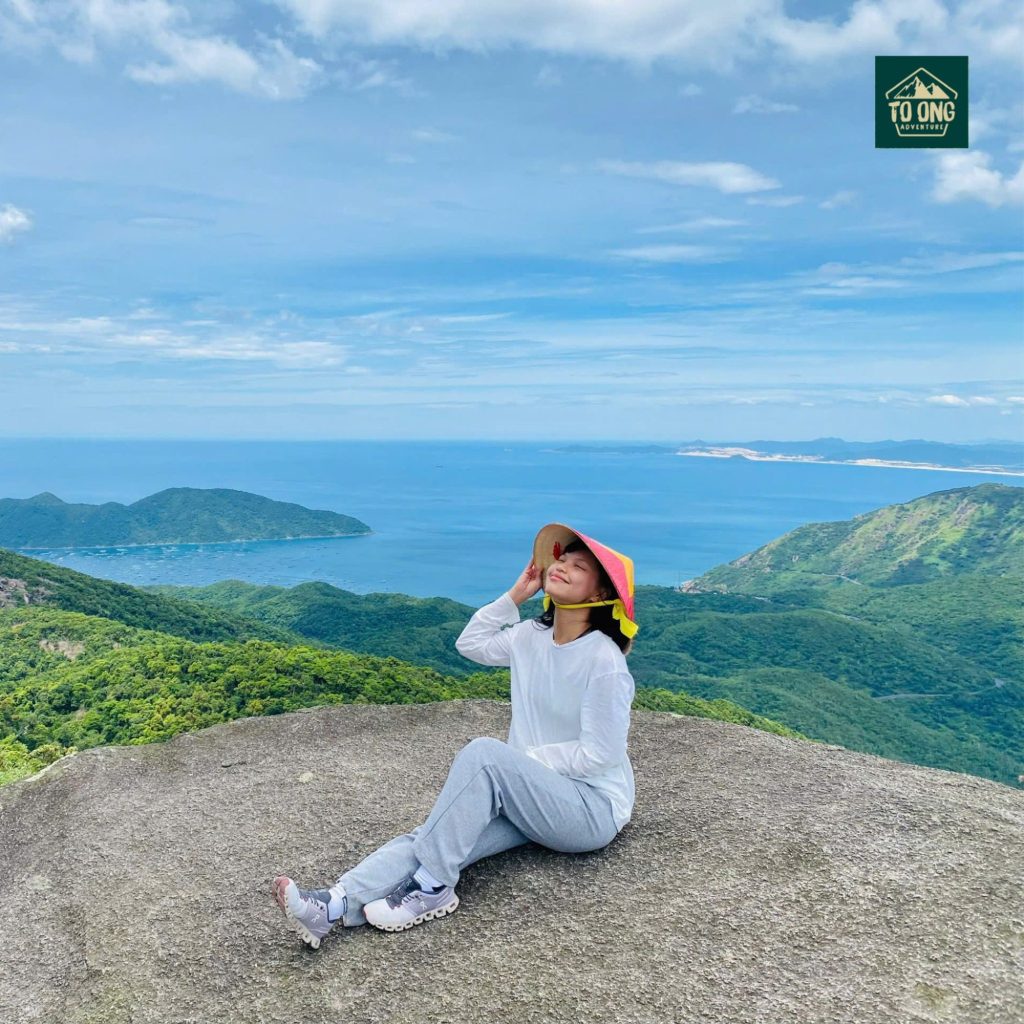
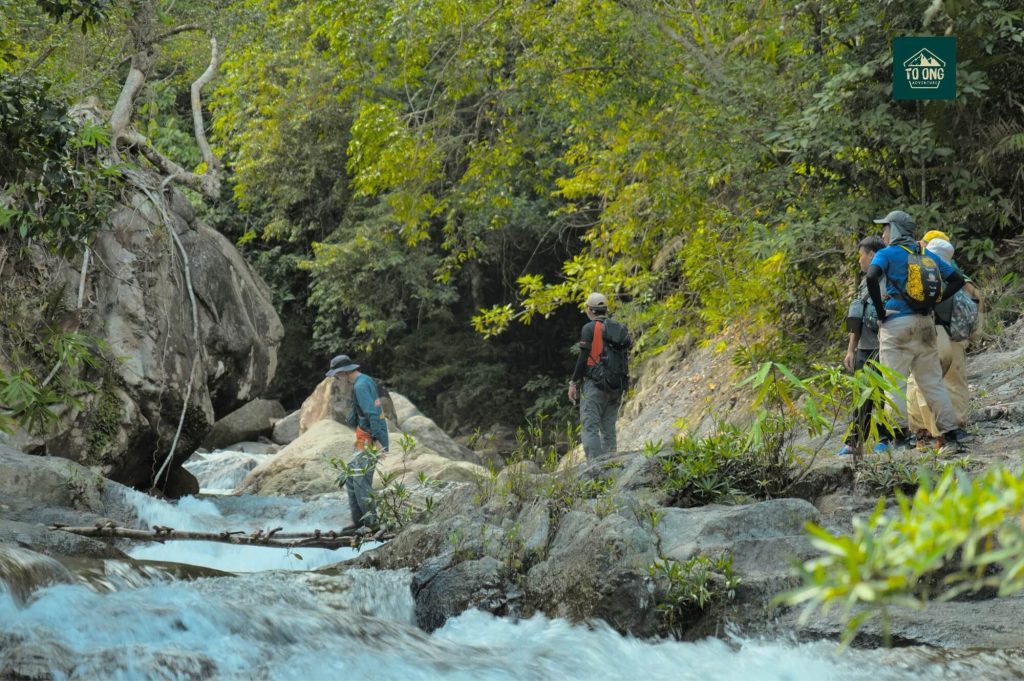
Returning to nature, people often become more reflective and profound. Walking over a carpet of dry leaves, you feel cool mist brush against your senses. Branches and leaves are full of life, trembling as the wind passes like a muse softly laughing. Birds chirp and compete for food in the canopy. The calls of gibbons blend into the song of the great forest. Truly, your soul must become quiet to understand the forest whispering beside your ear.When trekking with To Ong, you will experience mountain camping, early morning mist, check-in moments on scenic rocks, and the slopes of primeval forest.One important thing to remember is that trekkers must preserve the national park as it is. Make a promise to yourself: take nothing from this place except memories, and leave nothing behind except footprints. Be mindful so the forest can remain whole, as it has for thousands of years.
Small humans among majestic nature
Trekking in Bidoup Nui Ba requires permission from the authorities and guidance from experienced people. The forest may be poetic, but it is also full of risks. If you plan to conquer this land, let To Ong be your companion. To Ong believes its experienced and skilled guide team can help make your Bidoup Nui Ba journey complete.
Suggested reading:
View the Bidoup Nui Ba trekking tour at To Ong Adventure
9 interesting experiences not to miss in Da Lat
Packing tips for a Lao Than trekking tour