Discover Everest Base Camp
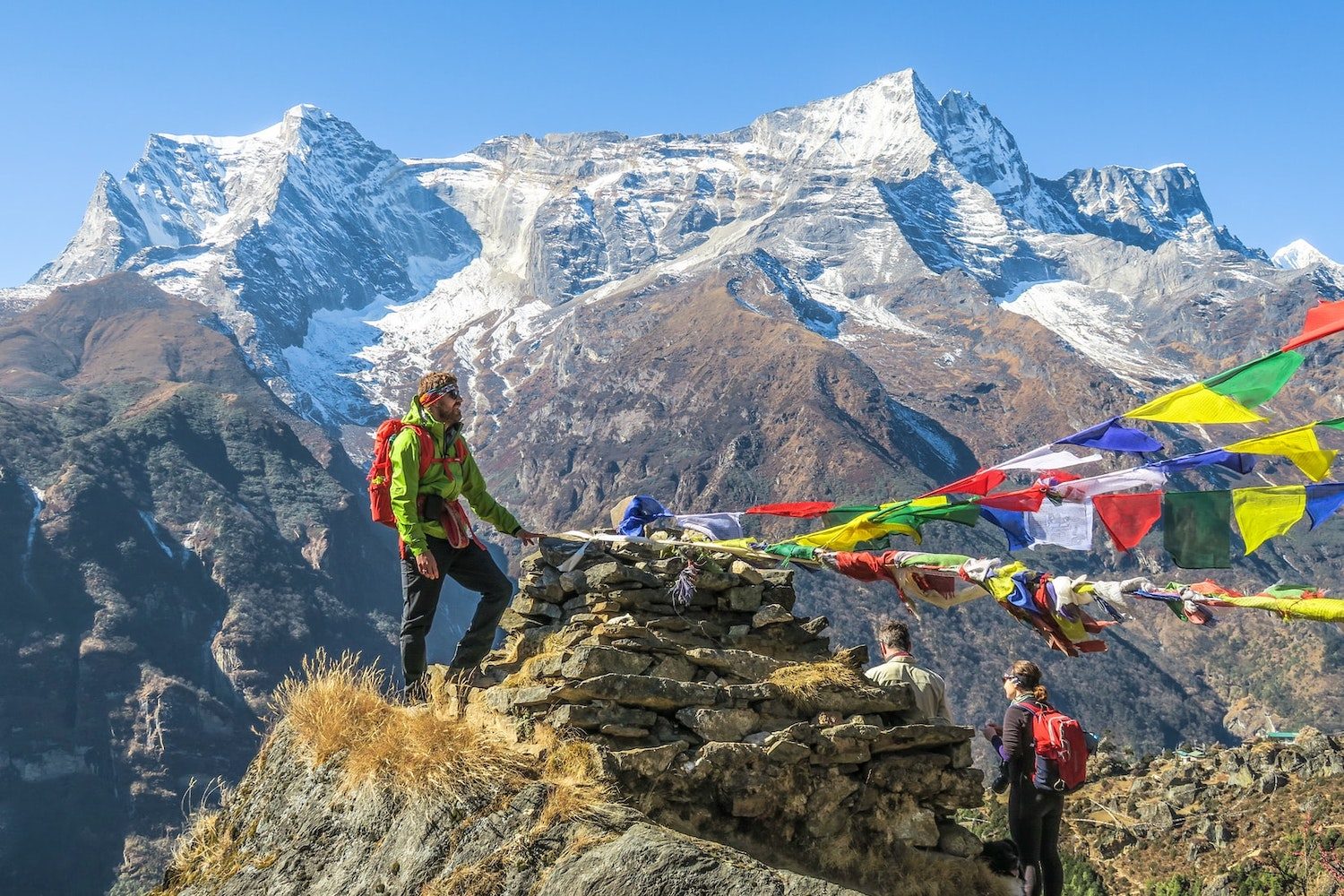
Since Everest was first conquered, countless adventure-loving travelers have set out to explore this great peak. Many mountaineers have successfully reached this masterpiece of nature, and the route to Everest has changed in many ways over time. But before reaching the roof of the world, let’s learn about the journey to Everest Base Camp.
Mount Everest – the roof of the world in the Himalayas
Located on the border between Nepal and Tibet, at 8,848 m above sea level, Everest is the roof of the world. At first, the mountain was called Sagarmatha by the Nepalese and Chomolungma by the Tibetans. It eventually took the name of Sir George Everest, who led the survey team for this mountain in 1841.
The journey to the roof of the world has never been easy. Landslides, altitude, and rugged terrain can all threaten the lives of those who attempt it. Yet these very challenges seem to become a powerful motivation for mountaineers determined to reach this summit.
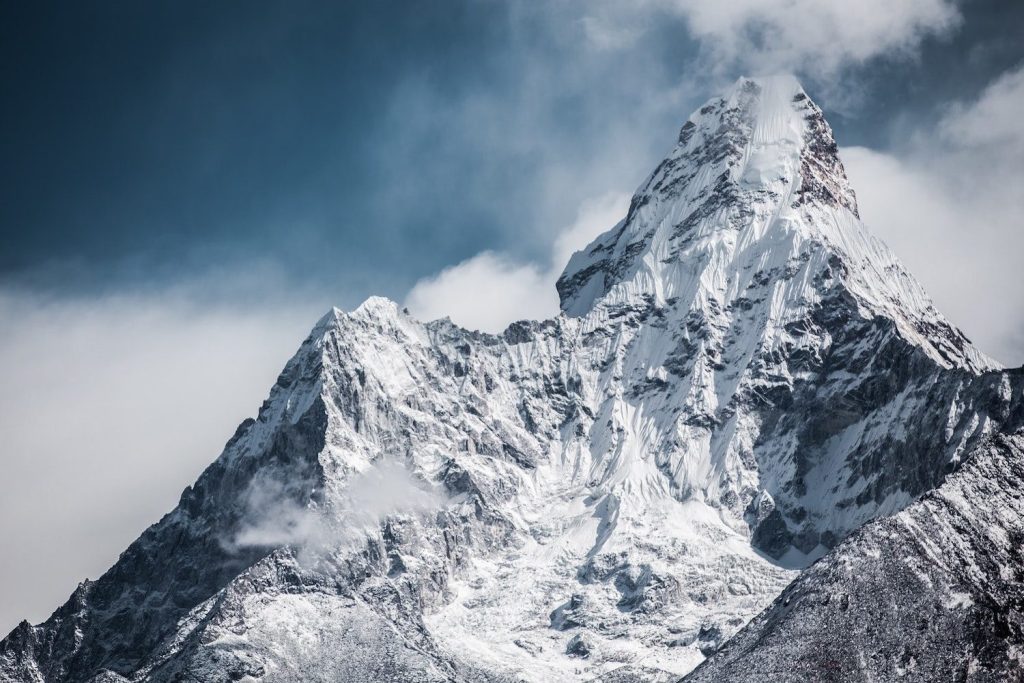
Mount Everest – a masterpiece of nature
By Martin Jernberg
Is Everest Base Camp (EBC) the summit of Everest?
In fact, the meaning is right there in the name: a base camp is the first stopping point on the journey to the summit of Everest. Today, there are two EBC sites in two different countries. The first is South Base Camp, the southern base camp at 5,364 m in Nepal. The second is North Base Camp, the northern base camp at 5,150 m in Tibet, China. EBC Nepal is probably more familiar to Vietnamese trekkers because the procedures are simpler and information is easier to find.
Everest Base Camp stands at 5,364 m and is the first major point to pass for those who want to conquer Everest. After that come the transit camps: Camp I at 5,900 m, Camp II at 6,400 m, Camp III at 7,500 m, and Camp IV at 7,950 m. The EBC trekking route usually lasts only 11 days, while climbing Everest requires around two months. So do not confuse these two journeys.
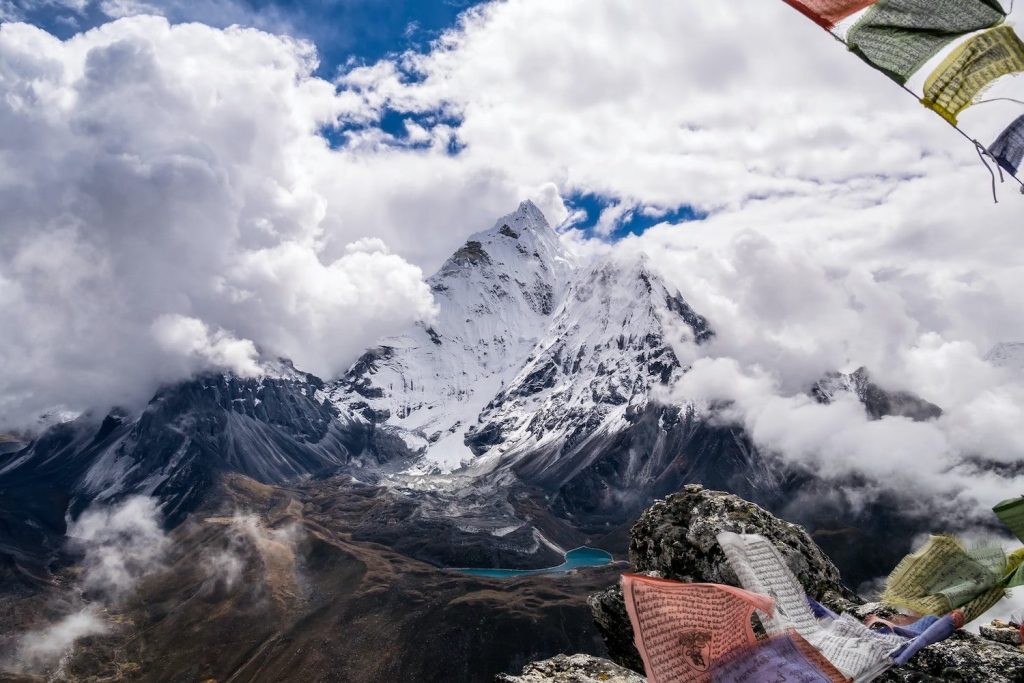
Everest Base Camp – the first stage on the route to conquer Everest.
By Toomas Tartes
Dangers on the journey to Everest Base Camp
At an altitude of 5,364 m, the oxygen around EBC is only about one-third of that near sea level. This is a major challenge for climbers because they do not have enough oxygen to breathe comfortably. As we know, the human body has limits, and it cannot endure well above 6,000 m without serious strain. Therefore, the higher the journey to EBC goes, the more dangerous it becomes. Near the top, you will feel the air thinning. If you are not a professional trekker, you may quickly reach your limit.
In addition, you may face injuries caused by frostbite. At this altitude, your heart has to make the body work harder to pump blood throughout the body.
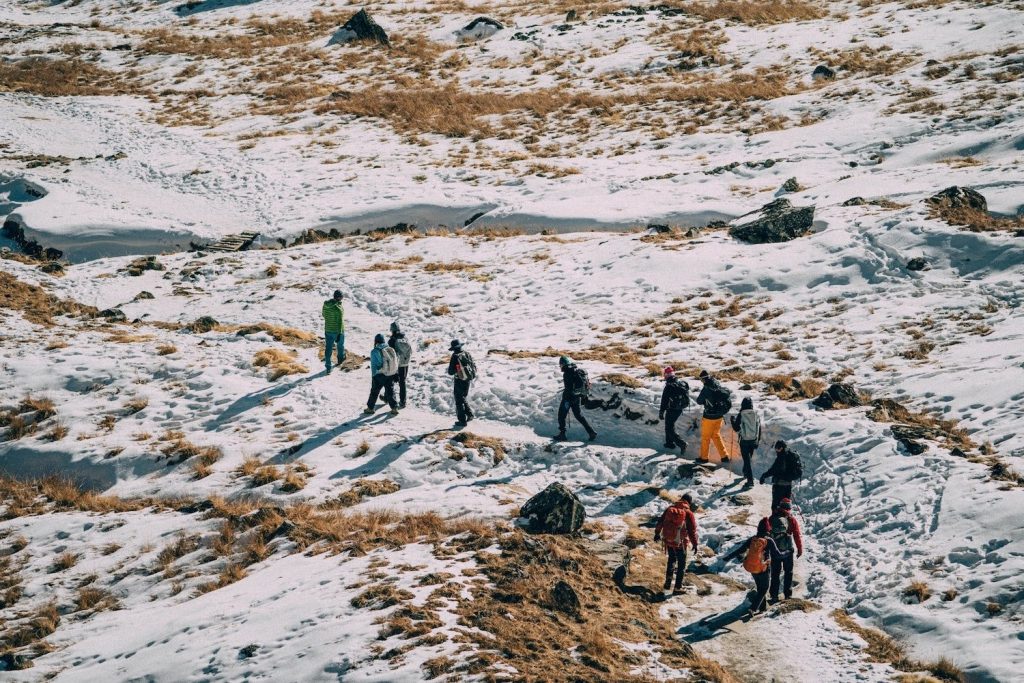
Dangers on the route to EBC
By JC Gellidon
Weather and the best time to trek Everest Base Camp
As you may have seen in films or online, the route to EBC can be covered in snow. But that is not all. The weather can be very hot, then suddenly freezing, snowy, and windy. To protect your health while taking on this route, consider bringing clothing suitable for both summer and winter. You will not know just how quickly the weather can change here.
The best time to trek the Nepal base camp route is spring (March to May) and autumn (September to December). These are considered ideal periods to fulfill the dream of reaching EBC. In particular, trekking during these seasons gives you the chance to admire blooming rhododendrons. The sky is also very clear, allowing you to take in the snow-white Himalayas at their best.
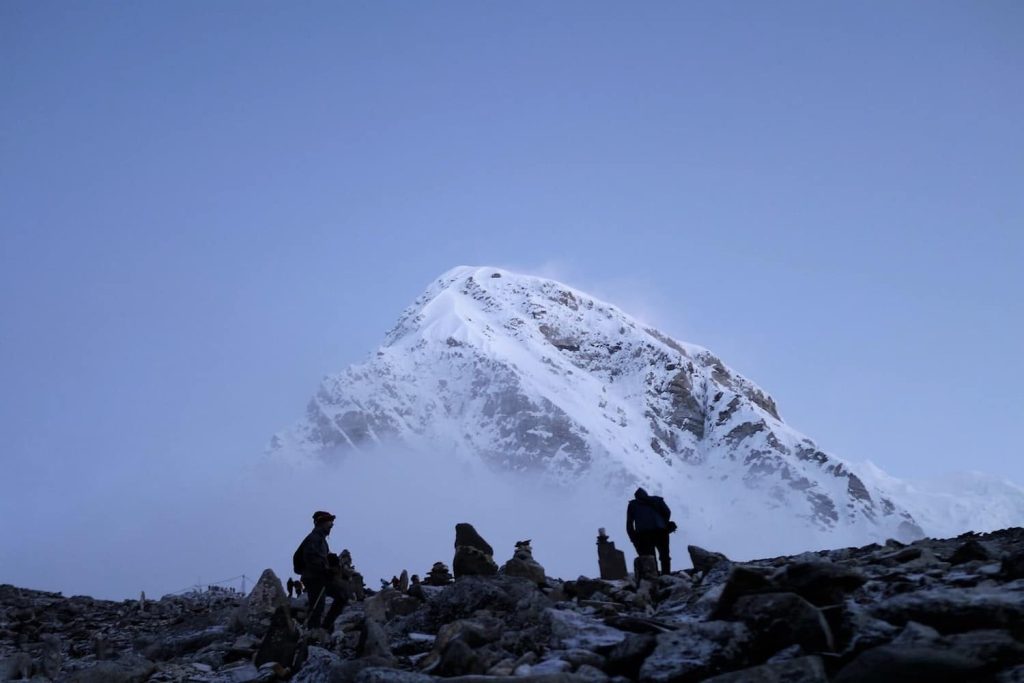
When is the best time to trek EBC?
By Michael Clark
How should you train before trekking Everest Base Camp?
As mentioned, although EBC is not at 8,848 m, the weather and trail conditions are still harsh. To make your trip as complete as possible, you need solid physical preparation. Start training 4 to 6 weeks before departure. You can build endurance with cardio exercises such as running, walking, swimming, or cycling. A small tip is to wear a backpack while doing cardio for better results. Exercises such as squats, push-ups, and deadlifts can also help strengthen your muscles. However, do not overtrain. Remember, the purpose of preparing before this trip is to increase your body’s endurance and improve lung capacity.

Strong endurance will make your journey more complete
By Arek Adeoye